APAG - American Photography Archives Group
  • Home
  • About
    • APAG Board
  • Membership
    • Members Only
  • News
  • Resources
  • Members Gallery
  • Conference
  • Education
  • Contact

Alexander Artway

Posted on June 21, 2015 by APAG in Member Profile
Hippo by Alexander Artway
Coney Island by Alexander Artway
Central Park by Alexander Artway

Grand Central by Alexander Artway
New York by Alexander Artway
photo of Alexander Artway

Alexander Artemiev was born March 25, 1903 in Gomel, Belarus, Russia. He was the youngest child of nine children. His prosperous family educated him in the gynazium where his older brother was the principal. Russia was in great turmoil in 1917, and Alexander, as well as so many others, was caught up in these changing times. He fought as a young teenager in the White Army. He said he liked the uniform and had to do this for his family’s land and property. In the army he was wounded in his left leg, which gave him trouble all his later life. He fled and went into exile for many years in Europe (Belgrade, Prague, Paris), until he was able to enter America. He arrived at Ellis Island in June of 1922 under the name Alexander Artway.

For the next 18 years Artway remained in New York City. He had to learn a new life; adjusting from living on a sprawling Russian farm to very close urban quarters. He worked more with his hands than with his mind, since his European degrees were meaningless in the United States. Away from all family but his brother John (Sergei), Alexander had to seek out new connections. He found Lena, a woman whose family was still in Ukraine. The two explored the city together and carried on an affair that lasted many years.

In New York, Artway was very fascinated by the skyscrapers going up. He recorded these buildings from every angle and rooftop, and perhaps even from airplanes. He attended and taught at NYU, taking a degree in architecture in 1934. Before going to NYU (with the aid of an organization called the Russian Student Fund) he joined the Merchant Marines. He later became a captain of ships and sailed around the world taking pictures of the foreign lands he visited. There are many beautiful studies of skies, clouds, and the ocean. He saw much more of the world than the average person of these times and led an unconventional life.

From his photographs it appears he was both excited and lonely. From his letters we can see that he was very attached to his mother and family back home. In fact, he returned to Russia in 1936 and ’37 to see them, a very risky business. The photographs from this trip to Gomel are touched by a tenderness and nostalgia found nowhere else in his work; they paint a picture of a man returning to his true roots. Even though he is pictured in these photographs in his New York City fine suits and hats, hair-line receding, one can spot a little boy’s grin in the photographs of Alex and his mother.

He documented New York City life yet avoided photographing people he did not know. He recorded city streets, friends, his love life, animals, churches, and of course, architecture. His eye was unique, and his negatives are marked by a modernist aesthetic with a touch of pictorialist romanticism. He photographed nearly compulsively for about 15 years and only slowed down after the birth of his first child. In Philadelphia he became a true family man, and the photographs after 1942 are reflective of Artway’s new identity.

It seems unlikely Artway could have imagined the form which his photographs now take. For him, they were a record of his life, of the compositions he saw around him, of a life well-lived. Now they form the Alexander Artway Archive made up of 4,000 negatives and 3,000 prints all neatly organized in plastic sleeves and black boxes. These are his legacy to his daughter Jeanette. The photographs from Russia, the portraits of his family and friends have become her heritage and her link to a family she’s never known. Now, as we begin to share these images with the public, we hope the photographs will become the heritage of many others. They tell the story of the trials and triumphs of an adventurous immigrant forging a life in America.

For more information please visit our website at www.alexanderartway.com or contact alexanderartwayarchive@gmail.com.

Leo Goldstein

Posted on October 6, 2014 by APAG in Member Profile
Boys and women, Sunday, East 102nd Street, East Harlem, c.1950
Portrait of a girl, East Harlem, c.1949
Girls playing on East 110th Street, East Harlem, 1952

Three young men, East Harlem, c.1950
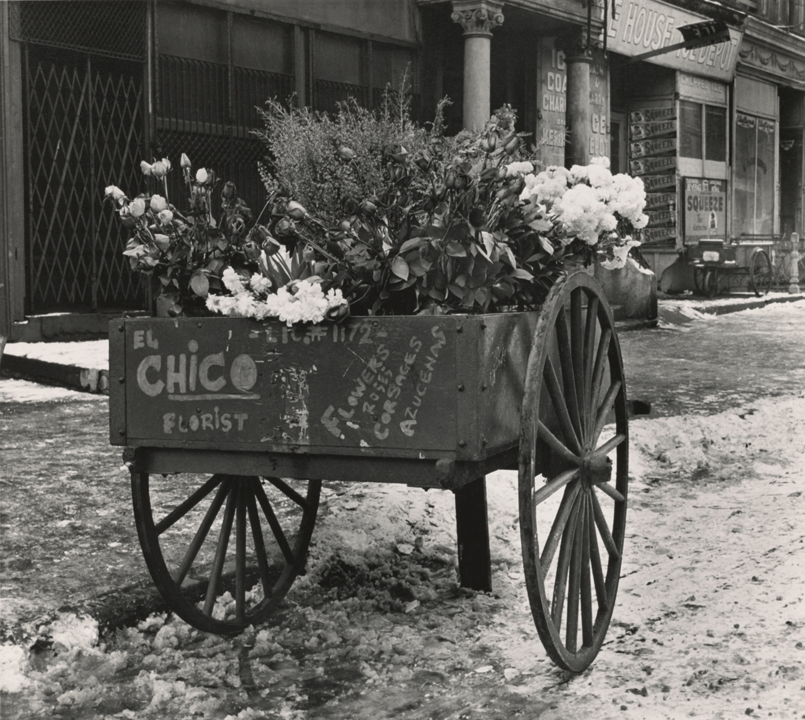
Chico florist cart, East 100th Street, East Harlem, winter 1951
Shopping day at La Marqueta, East Harlem, c.1950

leogoldsteinphotographycollection.com

leogoldstein.photos@gmail.com

East Harlem: The Postwar Years, powerHouse Books, 2019

For further info contact Naomi Goldstein: 917-596-3157


Leo Goldstein, 1901 – 1972

Leo Goldstein was born in 1901 in Kishinev in Bessarabia, an Eastern European region of Czarist Russia. Fleeing the pogroms, his family first settled on the Lower East Side of New York City in 1906, later moving to East Harlem.. Leo was the fourth of 13 children and went to work at an early age to help support the large family. As a young man he studied sculpting and was a talented amateur artist, taking up photography when he joined the Photo League in the late 1940s.

He threw himself into the social documentary tradition of the League, turning his lens, as many of the League members did, to the migrant and poor communities in New York City.  He was greatly influenced by the work of Paul Strand, Lewis Hine and Berenice Abbott, among other members. 

Beginning in 1949, and over several years, Leo photographed in East Harlem using a  Rolleiflex twin-lens camera that he had bought second hand.  With the body of work from East Harlem, Leo left an important and unique addition to the Harlem and Lower East Side studies done earlier by Photo League members.

Until 2016, when the prints were catalogued, the East Harlem photographs remained mostly untouched and unseen. Working with photo editor Regina Monfort, the family was able to have East Harlem: The Postwar Years published by powerHouse Books in the fall of 2019. The book includes 70 duotone images and essays by the award-winning journalist Juan Gonzalez and well known photography critic A.D. Coleman. The 70 vintage prints reproduced in the book  are part of a larger collection of East Harlem photographs consisting of over 250 silver gelatin vintage prints made by the artist.

The East Harlem book garnered excellent reviews, including an essay by Vince Aletti published in the journal Photograph. See the website listed above for this review and others.

A small number of Leo’s images have appeared in exhibits and publications of Photo League work, beginning with the seminal exhibit This Is the Photo League (1948-1949) and later in the book, This Was the Photo League, published by the Stephen Daiter Gallery and John Cleary Gallery in 2001. His work was included in “The Photo League, 1936-1951,” an exhibition organized by Howard Greenberg at the Photofind Gallery in Woodstock, NY in 1985. One of Leo’s images was also included in the 2011-12 exhibit at the Jewish Museum entitled “The Radical Camera: New York’s Photo League, 1936-1951.” 

Leo Goldstein’s work is represented by the Howard Greenberg Gallery.

Yousuf Karsh

Posted on December 8, 2013 by APAG in Member Profile


Archive contact:
Julie Grahame
http://karsh.org

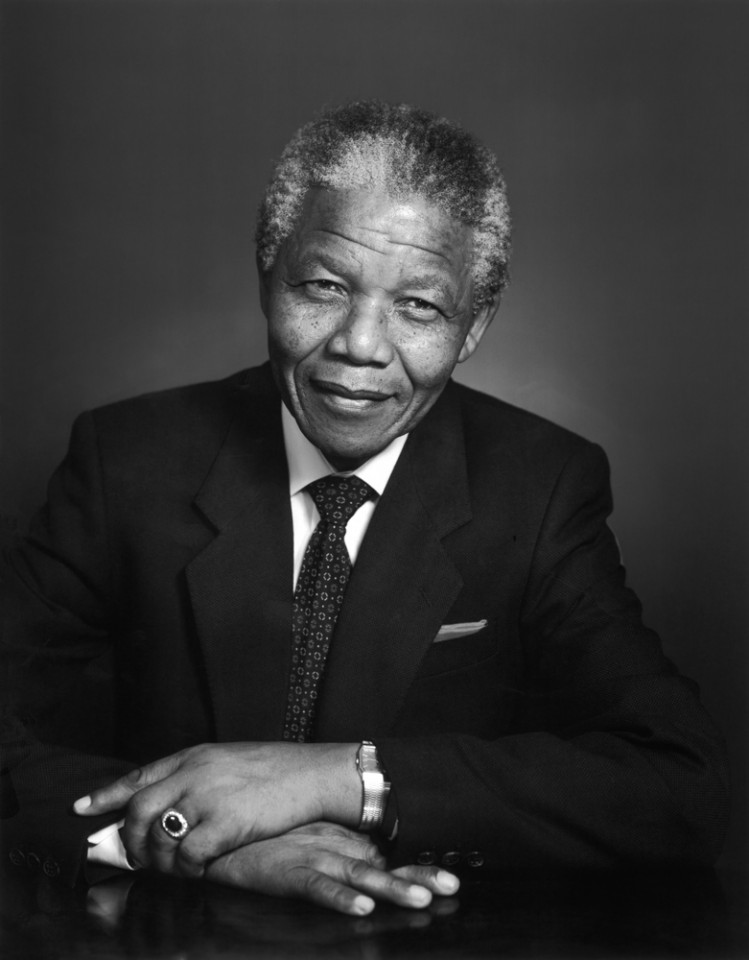
Yousuf Karsh (b. December 23, 1908 – d. July 13, 2002) Born in Mardin, Armenia
Yousuf Karsh grew up under the horrors of the Armenian massacres. In 1924 he was
brought to Sherbrooke, Quebec, by his uncle George Nakash. Instead of studying
medicine, as he had originally thought he would, Karsh was introduced to
photography. Karsh said “While at first I did not realize it, everything
connected with the art of photography captivated my interest and energy…” By
1926 Karsh was apprenticed to John H. Garo of Boston, a fellow Armenian and one
of America’s top portrait photographers at the time, of whom Karsh said “Garo
taught me to see, and to remember what I saw.”

By 1931 Karsh had returned to Canada and set up his own studio in Ottawa. He
soon met the editor of Saturday Night magazine and his photographs were
reproduced for the first time. A close relationship with the members of the
Ottawa Little Theatre gave Karsh the opportunity to learn about lighting (Garo
worked exclusively by daylight) and Karsh became a master.

Karsh was soon to become friends with Canadian Prime Minister Mackenzie King who
arranged for him to make the famous photograph of Winston Churchill in 1941 –
now thought to be among the world’s most reproduced images. One might say that
the rest is history. In the International Who’s Who of 2000, which listed the
most notable people of the last century, Karsh was the only Canadian of the 100
famous people listed – 51 of whom Karsh had photographed. Mrs Estrellita Karsh
and the Karsh curator, Jerry Fielder, endow and exhibit Karsh prints worldwide
and licensing of the archive keeps the body of work in the public eye.

Images, video clips, publications, awards, and more can be found at
http://karsh.org.

Sam Shaw

Posted on October 13, 2013 by APAG in Member Profile


Sam Shaw (1912 – 1999)

www.shawfamilyarchives.com
contact: info@shawfamilyarchives.net

Sam Shaw, a lifelong New Yorker, was born on the Lower East Side of Manhattan. Shaw is internationally recognized for his photographs of films and movie stars, though his interests and talents covered a wide array of subjects including music, theater, sculpture, painting, literature, journalism, as well as social and political activism. Shaw’s prolific six-decade career is remarkable in its breadth and diversity, and remains a historic record of the twentieth century.

Shaw displayed his artistic talents from an early age— without money for materials, he gathered tar from the streets of New York to make sculptures. Shortly after graduating high school, he shared an art studio with the artist Romare Bearden. Shaw eventually turned towards photography but Bearden and Shaw continued to work together throughout their lives. Many of Shaw’s photographs from films, as well as portraits of jazz and blues musicians appear in Bearden’s collages and murals. The two also collaborated on projects with the jazz and literary critic Albert Murray.

In the 1940s, Shaw worked as a courtroom artist, then as a political and sports cartoonist and art director for The Brooklyn Eagle. His career as a photojournalist began with Colliers magazine, which allowed him to travel throughout the United States documenting the lives of coal miners, sharecroppers, burlesque performers, New Orleans’ musicians, civil rights activists, and other everyday people and circumstances. These soulful photographs comprise Shaw’s “Americana” collection, images depicting American life in the mid-twentieth century. Shaw was also an early contributor to the prestigious photographic agency Magnum Photos.

In the early 1950s, Shaw began working in the film industry as a special still photographer. He captured countless stars of the cinema, including Woody Allen, Humphrey Bogart, Marilyn Monroe, Marlon Brando, Alfred Hitchcock, John Wayne, Fred Astaire, Elizabeth Taylor, Ingrid Bergman, Sophia Loren, Charlie Chaplin, Audrey Hepburn, Frank Sinatra, and many more. His photographs appeared often on the cover of LIFE and Look magazines, as well as in Paris Match, L’Europeo, The Daily Mail, Der Stern, Harper’s Bazaar, Connaissance des Arts, and others. Shaw preferred to shoot his subjects without set-ups, makeup, or decorations, encouraging them to be spontaneous and improvise— a style that set Shaw’s work apart from the stereotypical Hollywood “glamour” photographs of the day and foreshadowed his later role as an independent filmmaker.

Shaw was also known as a master of publicity for many of the films and stars with whom he worked. In 1951, he photographed Marlon Brando in a ripped t-shirt, a portrait that came to symbolize A Streetcar Named Desire. A few years later, he created the iconic image of Marilyn Monroe with her white skirt blowing over a subway grate in the film The Seven Year Itch. Shaw’s “flying skirt” pictures are some of the most widely seen photographs ever taken.

After years on film sets, Shaw started making films himself in the 1960s. The first film he produced was Paris Blues (1961), starring Paul Newman, Sidney Poitier, Joanne Woodward, Diahann Carroll and Louis Armstrong. Shaw’s good friend Duke Ellington wrote the score for the film. Shaw also worked closely with acclaimed actor-director John Cassavetes, the father of American independent cinema, as an advisor on Cassavetes’ first film Shadows (1959). Shaw went on to produce many of Cassavetes’ films including A Woman Under the Influence (1974), nominated for Best Actress and Best Director at the 1975 Academy Awards, and Gloria (1980), which won the prestigious Venice Film Festival’s Golden Lion. In addition, Shaw produced Cassavetes’ Husbands (1970), Opening Night (1977), and The Killing of a Chinese Bookie (1976) (he later removed his name as Producer), the latter for which he was also the Production Designer. These films, like Shaw’s pictures, embraced independence and encouraged spontaneity.

John Cassavetes aptly described his best friend Sam as a “Renaissance Man.” Shaw’s true love, however, remained photography. Even as a producer, Shaw remained the special photographer on set, while also helping to create the publicity and advertising campaigns for all the films he produced.

Shaw carried at least two beat-up Nikons around his neck wherever he went; ready to capture anything and anyone that caught his attention in both black and white and color. As a result, Shaw’s photographic archive contains a vast array of subject matter from crime photography, sports, landscapes and photojournalism to classic American and European cinema, independent film, and portraiture. The collection includes photos of prominent musicians, artists, intellectuals, and other well-known individuals such as Marc Chagall, Arthur Miller, Marcel Duchamp, Igor Stravinsky, Joe DiMaggio, Irving Berlin, Tennessee Williams, Patti Smith and Deborah Harry of the rock band Blondie.

Today, Sam Shaw’s legacy and work is preserved and promoted by his children and grandchildren through Shaw Family Archives.

Erika Stone

Posted on September 16, 2013 by APAG in Member Profile


Erika Stone
1924 –
Home page: http://www.erikastone.com
Archive contact: Erika Stone (Erika@erikastone.com) or www.howardgreenberg.com

Erika Stone’s documentary photographs reflect her long, active career as a photo journalist and magazine photographer. In the 40’s, Stone was a member of the legendary Photo League, an organization of photo documentarians which she feels most influenced her approach to her personal photographic work. It was during the years as a League member that she developed her interest in documenting people and at the age of seventeen, produced her Bowery series.

Although she considers herself mostly self-taught, she studied at the New School of Social Research with Bereniece Abbott and George Tice.

Stone was a stringer for both Time and Der Spiegel magazines and worked as a general photojournalist until 1960. After the birth of her two sons, she made photographing children and family her specialty. Her photographs have been and are widely published in magazines and textbooks around the world.

Her books include Pro Techniques of Photographing Children, HP Publishing 1986, Tot Shots, a four book series published by Modern Publishing Company 1987, three books in the Walden Publishing Company’s Open Family series: On Divorce, Fears and Phobias, The Adopted One. Nicole Visits an Amish Farm, Walker Publishing and Learning for Little Kids, Houghton Mifflin, as well as The Whole Child by Putnam.

Stone was one of twenty women photographers whose work was published in an anthology Women of Vision in 1982. Her pictures appeared in the US Camera Annuals 1952, 1954, 1955, and 1956. Her fine art and documentary work is in the collections of the Museum of the City of New York, The International Center of Photography, George Eastman House in Rochester, The Portland, Maine Fine Arts Museum, The New York Public Library, and The National Gallery of Ottawa, Canada.

Lawrence Fried

Posted on August 12, 2013 by APAG in Member Profile


Archive contact:
Patricia Fried
lawrencefried.com

LAWRENCE FRIED (1926-1983)
Larry, as he was known throughout the industry, was an award-winning photojournalists, who covered the political, social, and artistic events of his time for top publications such as The New York Times, Newsweek, The Saturday Evening Post, Vogue, Collier’s, and Parade Magazine. Fried became interested in photography while serving as a platoon sargeant with the First Infantry Division during World War II. Using an old camera found on the battlefield, Fried took shots of the battle action and was surprised to learn they were sold to a wire service. Influenced by wartime imagery, he returned to the States and went to the University of Miami on the GI Bill becoming a theatrical director and photographer.
 He returned to his native New York City where he immersed himself its theatrical world, shooting for the Pix Photo Agency. After a quick stint on staff for LIFE, he became a dedicated free-lancer. In his thirty year career he covered a wide range of stories from theatre for the New York Times to three trips into Viet Nam and Cambodia to world leaders such as Chang Kai-shek and President John F. Kennedy. A favorite of the Kennedys, Fried photographed JFK, Robert Kennedy, Ted Kennedy and Jacqueline Kennedy. His Newsweek cover of RFK was chosen for the cover of To Seek A Newer World. His photograph of a mourning Jacqueline Kennedy along with “The Three Rabbis” are in the permanent collection of the Smithsonian Institution. While riding in the presidential motorcade covering Lyndon Johnson in1964 for the Saturday Evening Post, his car caught on fire and his leap was captured on the front page of many major newspapers throughout the world including The New York Daily News.

Throughout his career, he photographed an extensive list of musician, actors, and visual artists such as: Louis Armstrong, Bob Dylan, Bette Midler, Mick Jagger, Stevie Wonder, Meryl Streep, Marilyn Monroe, Brando, James Dean, Shirley McClaine, Andy Warhol, Richard Serra, and Willem DeKooning. Fried had the distinction of having photographed the most Newsweek covers in the history of the magazine.

Fried was a three-term president and 32 year member of the ASMP, the American Society of Magazine Phtographers, a trade organization and was instrumental in the development of the first Business Practices book in 1973.

In 1975, Fried co-founded The Image Bank calling on friends such as Jay Maisel, Pete Turner, Walter Iooss, and Douglas Kirkland to join. The Image Bank quickly became the premier agency of its kind with franchises all over the world. TIB created a new model of selling stock photography that is followed to this day. Getty Images bought the company in 2000.

Awards. Fried was the recipient of the Photographer of the Year award by the Overseas Press Club, the prestigious Benjamin Franklin Award and the Outstanding Service to ASMP award. For the first time in five administrations, President Dwight Eisenhower granted an exclusive photographic interview with Fried. The resulting photographs earned him the Benjamin Franklin Award for 1959. In 1960 he received the Overseas Press Club Photography Award for outstanding interpretation of foreign news for a series about life in Siberia growing out of his two trips to the Soviet Union where he covered 50,000 miles of Russian territory by train. The idea for the trip came to him after his camera was smashed by a guard at Moscow airport. He was offered an official apology. He refused it and requested special permission for a trans-Siberian trip instead. His request was granted.

Arthur Rothstein

Posted on August 9, 2013 by APAG in Member Profile


Arthur Rothstein
1915 – 1985
website: http://arthurrothsteinarchive.com

Arthur Rothstein grew up in New York City. He had been a student at Columbia University when he met Roy Stryker, an academic who was hired by the administration of President Franklin Delano Roosevelt to manage the Historical Section of the Resettlement Administration. The Historical Section was created to use photography to document and publicize the large-scale economic dislocations caused by the Great Depression and the widespread displacement and disruption of agricultural communities during Dust Bowl of the 1930s, as well as the government programs designed to assist the displaced. It was subsequently known as the Farm Security Administration (FSA) photography project.

Stryker initially hired Arthur to design and construct the darkroom for the project in Washington, D.C., and he was sent into the field as a photojournalist the following year, 1935, when he was twenty years old. For more than five years he and other FSA photographers traveled the country on assignment for the U.S. government, documenting the plight of displaced farmers, workers, their families and their communities. Today, the public archive of FSA photographs maintained by the Library of Congress contains more than 11,000 photographs taken by Arthur Rothstein.

As the country began to mobilize for World War II, the FSA photography project was transformed into the Office of War Information (OWI). Rothstein left the OWI and had just started working for Look magazine when the United States entered World War II. During the war he covered Europe, India and Burma as a Signal Corps photographer. Rothstein then documented the day-to-day lives of displaced persons (Holocaust survivors) struggling to subsist in the Shanghai Hongkew ghetto, as well as the consequences of the Great Famine in China as Chief Photographer for the United Nations Relief and Rehabilitation Administration in 1946 and 1947.

He returned to the U.S. and Look magazine, where he served as Director of Photography until its demise in 1971. When Look folded Arthur became Director of Photography at Parade Magazine and spent more time writing and teaching photojournalism and documentary photography until his death in 1985. Throughout his career Rothstein was also an innovator. For example, he was instrumental in the invention of the Xograph, which was the first printing process that enabled mass reproduction of a photograph that appeared, to the unaided eye, to be three-dimensional.

The common thread throughout Arthur’s career, beyond the promotion of technical innovation, was his passion for the use and perpetuation of photojournalism and documentary photography toward the betterment of society. During the 1930s and 1940s he had been an active member of the Photo League, which was dedicated to the use of documentary photography to effect social change.

He loved to share his craft. He loved to mentor young photographers. He authored columns in photography magazines, and produced nine books on photography. Arthur Rothstein, died in 1985 leaving a magnificent historical legacy. His photographs, and those of many of the photographers he mentored, continue to be printed in the media and hung in museums.

Philippe Halsman

Posted on August 2, 2013 by APAG in Member Profile

Halsman.Dali

Philippe Halsman   1906 – 1979

Archive contact: Irene Halsman (halsman.irene@gmail.com)

Philippe Halsman (b. May 2, 1906 – d. June 25, 1979) was born in Riga, Latvia.  He became one of the great portrait photographers of our time.  He started by studying engineering in Germany, but began his photographic career in Paris, where he designed his own 4 x 5 twin lens reflex camera.

Part of the great exodus of artists and intellectuals who fled the Nazis, Halsman arrived in the United States with his young family in 1940, having obtained an emergency visa through the intervention of Albert Einstein.

Halsman’s prolific career in America over the next 30 years included reportage and covers for every major American magazine.  He had more Life magazine covers (101) to his credit than any other photographer, and three of his well-loved portraits – of Albert Einstein, Adlai Stevenson, and John Steinbeck – were used on United States Postage Stamps.

His colleagues elected him as the first president of the American Society of Magazine Photographers (ASMP) in 1944, and in 1958, he was chosen as one of the world’s Ten Greatest Photographers in an international poll.   He was the recipient of the ASMP Life Achievement in Photography Award in 1975.   Beginning in 1986, the ASMP instituted an annual Philippe Halsman Award for Photojournalism.

His work is represented in the permanent collections of numerous museums in the United States and abroad.  Among his many one-man exhibitions was a retrospective that began at the International Center of Photography in New York in 1979 and continued to tour the United States until 1988.

He was on the faculty of the Famous Photographers School, and from 1970-1979, he taught a seminar on Psychological Portraiture at the New School in New York City.

Halsman Portraits, published in 1983, is a survey of his contribution to the art of portraiture.  Philippe Halsman’s Jump Book, is a collection of portraits of famous people jumping, first published in 1959 and reissued in 1986.  Both books were published by Harry N. Abrams, Inc.

With the publication of Halsman, a Retrospective, the Smithsonian National Portrait Gallery mounted a huge exhibition which toured the United States in 1998 and also went to the Tate Gallery in London and the Hotel de Sully in Paris.


Philip Trager

Posted on August 2, 2013 by APAG in Member Profile


1935-

Home Page: http://www.philiptrager.com/

Contact: phtr@earthlink.net

Active as a photographer for more than forty years, Philip Trager is a preeminent photographer of dance and architecture. His photographs of contemporary dancers and performance artists have expanded the genre of dance photography. His book, The Villas of Palladio, has become a standard document for architects and architectural historians. His most recent books are Philip Trager, a retrospective book, and Faces, both published by Steidl.

Four of his ten books have been chosen for the annual books selection of The New York Times Annual Review of Books. Among other book awards are Finalist for the Grand Prix Award at Les Rencontres Internationales de la Photographie, Book of the Year for the American Institute of Graphic Arts and Best Books selections of Interview, Vanity Fair, The Times (London), New York Magazine, Los Angeles Times Book Review and others.

Trager’s photographs are in international private, corporate and institutional collections. In New York, they are in the permanent collections of the Museum of Modern Art, the Metropolitan Museum of Art, Museum of the City of New York, New York Historical Society, and the New York Public Library (which recently acquired eighty photographs). The Library of Congress has acquired the definitive collection of his photographs and will house his archive as part of its core collections.

There have been numerous exhibitions of Trager’s photographs internationally, including a traveling retrospective exhibition of his work presented at several venues, including  The National Building Museum in cooperation with the Library of Congress. The New York Public Library recently mounted a major exhibition of his work.

Margaret McCarthy

Posted on May 3, 2013 by APAG in Member Profile


Home Page: www.margaretmccarthy.com

Contact: artist@margaretmccarthy.com

Inspired and indebted to mythology, photographer  Margaret McCarthy brings the eye of a poet to her photography, exploring the archetypes of myth and dream in her imagery.

“I want to reach the viewer on an intuitive level, with photographs that are visually, psychologically and spiritually compelling,” she says. “My goal:  to make images that bridge past and future, inner and outer worlds, art and commerce. My philosophy: Beauty in an ugly age is revolutionary.”

Her techniques include working with B&W infrared film, using images in sequences, and collage in order to create a sense of “otherworldliness” and a transcendent vision of the human imagination. Her landscapes capture a sense of the fecund creativity of the natural world.

She has exhibited her photographs extensively, including the Fogg Art Museum, the Overseas Press Club and The Hudson River Museum, as well as numerous galleries, universities and public exhibition spaces. Her “Divine Feminine” series is now part of the Kinsey Institute Art Collection.

A few of the fine art publications where her work has appeared in include: MUSEÈ Magazine, aCURATOR,  LE JOURNAL de la PHOTOGRAPHIE,  Elizabeth Avedon’s Photography BlogSpot, ARTS AND LETTERS JOURNAL OF CONTEMPORARY CULTURE,  WRITING ON WATER  (MIT Press), PARABOLA Magazine, IN PRAISE OF THE MUSE: Women Artists Datebook, and COMBINATIONS: A JOURNAL OF PHOTOGRAPHY.  Her work was the subject of an Adams-Russell Cable TV documentary, MARGARET McCARTHY PHOTOGRAPHS IRELAND.   McCarthy’s images have garnered clients as diverse as BMG Classics (the Bertelsmann Music Group), Narada World Music, Bristol-Meyers Squibb Co., Westchester Gannett Newspapers and the New York Times Travel Section.  She has also documented the peace and social justice movements of the last two decades with her camera.  She is a member of ASMP, the American Society of Media Photographers and its Fine Art Brain trust, and APA, American Photographic Artists.

McCarthy has been awarded fellowship grants from The Virginia Center for the Creative Arts, The Ragdale Foundation and The Hambidge Center for the Creative Arts & Sciences.   The National Tourist Office of Spain, The Irish Tourist Board, The Council on International Education Exchange (CIEE) and The Aegean Institute have supported her independent photographic projects all over the world.

A graduate of New York City’s School of Visual Arts, she has taught and mentored art students through The Great Lakes Colleges New York Arts Program.

An accomplished writer as well, McCarthy’s poetry has appeared in numerous literary magazines and journals; her play about John Lennon, THE SACRIFICIAL KING, was given a New York City production by the World 3 Theatre Company.

DEIRDRE was presented at La Mama Theatre’s Experiments, NYC.

Her latest venture A VISION AND A VERSE www.avisionandaverse.com

combines her imagery and poetry as an electronic broadside.

  • «
  • ‹
  • 4
  • 5
  • 6
  • 7
  • 8
  • ›
  • »

APAG

  • Home
  • About
    • APAG Board
  • Membership
    • Members Only
  • News
  • Resources
  • Members Gallery
  • Conference
  • Education
  • Contact

Contact APAG

Contact APAG for membership, information, or with questions:

Visit our Contact Page »

Follow us on Facebook »

All photos on this website are protected by copyright of the individual photographers and archives whose photographs are represented. All rights reserved, and photos are not allowed to be used for any purpose without permission. Please write to the archives or photographers directly for permission requests.

(*) ©2026 APAG – American Photography Archives Group | Site by KPFdigital | Log in