APAG - American Photography Archives Group
  • Home
  • About
    • APAG Board
  • Membership
    • Members Only
  • News
  • Resources
  • Members Gallery
  • Conference
  • Education
  • Contact

Wynn Bullock

Posted on May 27, 2020 by APAG in Member Profile
Tree Trunk, 1971
Sea Palms, 1968
Color Light Abstraction 1007, 1961

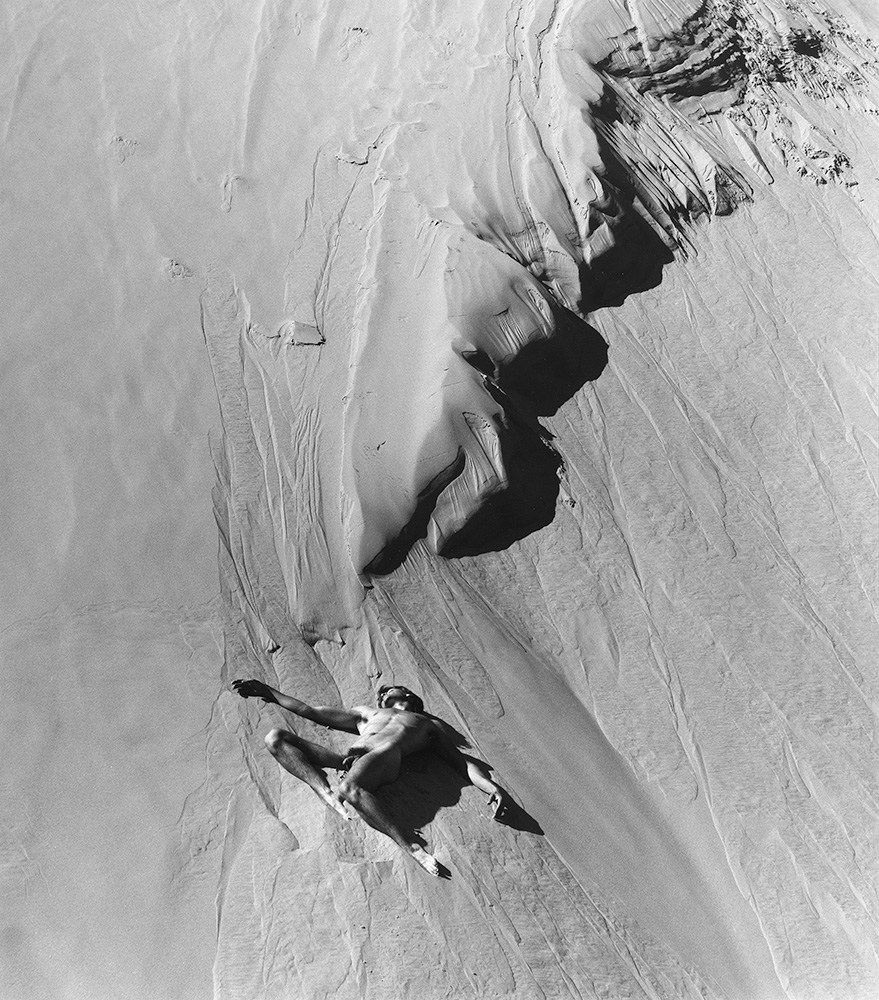
Erosion, 1959
Child in Forest, 1951
Reticulation, 1945

WYNN BULLOCK

Archive Contact: Barbara Bullock-Wilson (bbw@wynnbullockphotography.com)

http://www.wynnbullockphotography.com/

Wynn Bullock (1902-1975) was born in Chicago and raised in South Pasadena, California.  His boyhood passions were athletics and singing.  The latter became his first career, and it was not until he was giving concerts in Europe in the mid-1920s that he became intrigued with the visual arts.  He bought himself a simple camera and began taking pictures.  Photography remained a hobby, however, until 1938 when he enrolled in the Los Angeles Art Center School.  There he concentrated his efforts in experimental imagery.  Three years later, his work was showcased in one of the early solo photography exhibitions at the L.A. County Museum of Art.

Shortly after World War II, Wynn moved his family to the Monterey Peninsula where he had obtained the photographic concession at Fort Ord.  Although Wynn earned a good living as a commercial photographer, it was in his personal work that he found his greatest fulfillment.

A major turning point in Wynn’s life as an artist occurred in 1948 when he met Edward Weston and was inspired to pursue new avenues of photographic exploration and expression.  Throughout the decade of the 50s, Wynn devoted himself to establishing deep, direct connections with nature in and around the Central Coast of California.  A lifelong learner, he also read widely in the areas of theoretical physics, General Semantics, philosophy, psychology, eastern spirituality, and art.  Studying the work of such people as Albert Einstein, Lao Tzu, and Paul Klee, he kept evolving his own dynamic system of principles and concepts that both reflected and nurtured his creative journey.  In the mid-1950s, two of his photographs were included in the famous Family of Man exhibition and his reputation as a master photographer spread worldwide.

Between 1959 and 1965, Wynn departed from black and white imagery and produced a body of work he referred to as “color light abstractions.”  For him, these photographs represented an in-depth exploration of the phenomenon of light, manifesting his belief that light is a great force at the heart of all being, “perhaps,” as he said, “the most profound truth in the universe.”

By the mid-60s, Wynn was ready to explore the mysteries of light and life from new perspectives.  Developing the means to visually manifest the dynamic qualities of time through long time exposures and multiple images became a key aspect of his work.  This was followed by a relatively brief period of imagery similar in feeling and power to the quiet essence of Haiku poetry.

At the end of the 1960s, Wynn embarked on what was to become the last leg of his creative journey.  Although he included upside-down and negative printing in his repertoire of techniques, it was not their unusual effects that interested him.  What was important was how they served to symbolize new ways of relating to and knowing the world.  Many of his photographs from this period reveal light emanating from within the heart of things, life glowing and pulsing with energy and vitality.  Other photographs are of natural forms that depict or suggest universal human qualities, humanity “deeply embedded in” and re-united with nature.

Shortly before his death in 1975, Wynn became one of the five founding artists whose archives established the University of Arizona’s Center for Creative Photography.  His work is also featured in the permanent collections of over one hundred other institutions throughout the world as well as in three films and numerous publications.   More detailed information may be found at www.wynnbullockphotography.com.                                                                                                                                                                                                                                                           

Walfred Moisio

Posted on December 18, 2019 by APAG in Member Profile
NY Tennis Club, 1950s
Two sailors in the North End of Boston,
Gas Station Cowboy, Arizona, 1952

Street Corner, Manhattan From Above, 1938
Stickball in the Bowery, 1938
Catholic Mission Bowery, 1940

For more information contact Scott Berube – berubescott1@gmail.com


WALFRED MOISIO (1910-2002)    NYC (1928-1952)

The work of Walfred Moisio was quite simply lost to the world for a number of decades and has luckily only recently re-surfaced to be rediscovered.

Walfred Moisio (1910 – 2002). For over three decades, Moisio dedicated his life to observing the ever-changing streets of New York City, candidly capturing  the emotions of its people and time.

Born in 1910, Moisio grew up on a Massachusetts apple farm and from 1928-32 he put himself through Columbia University earning a fine arts degree in photography, in 1933 he moved to New York City to join the Emergency Relief Bureau in a position as photography instructor and later working for the likes of The New Yorker, Esquire, Time, Look, Harpers Bazaar, Vogue, and the New York Times.

Capturing a time of elegantly turned-out Wall Street businessmen and a magnificent burgeoning stone and steel skyline, contrasted by the impact of the great depression.

While contemporaries such as Alfred Stieglitz and Walker Evans influenced his work, what makes Moisio stand apart is both the quality of his observations and the fact that his work has scarcely ever been seen, until now.

Moisio’s street photography artfully captures many of the cultural and historical events of the 1930s and 40s, while presenting us with a wholly original point of view of New York.

Moisio’s ability to depict the essence of time and place within his honest and documentary style of photography is captivating. In this way he explored the social issues of the time. However, whilst you see casual traces of racial integration, sexuality and economic status, you do not feel he is politicising his photographs.

What you feel in looking at his New York is an optimism of spirit and gesture that feels both timelessly enduring and long ago lost in the City we experience today.

For nearly a half-century, the photographs of Moisio had been in storage in the basement of his home in Massachusetts. The public has until now has seen only a handful of these images that focus on scenes of a long ago forgotten New York and the culture of that time.

In 2018 a collection of 700 color slides surfaced documenting one of the earliest cross country road trips over route 66 to California from NYC recorded by a professional photographer. Mr. Moisios archive consists of several thousand negatives and photographs waiting to be seen and enjoyed

Paula Barr

Posted on December 11, 2019 by APAG in Member Profile
Red Dirt Alabama, 1977
Ernest at Gulf State Fair, 1977
Atrium MIMC, 1995

WTC in A Mud Puddle, 1978
Flatiron Building, 2000
WTC Facing East, 1984

The Paula Barr Archive representative is Dr. August Krueger.

To contact, please email info@paulabarr.com or visit the website, www.paulabarr.com


Paula Barr was born in Pennsylvania.  She was raised in Mobile, Alabama during the tumultuous times of the 1960’s.  Barr studied painting at Boston University and gained a BFA with honors. Upon graduation, she went directly to New York City to set up her first studio in Little Italy.  It was a magical time in New York City – the late 60’s, 70’s and 80’s – it was a small bourgeoning community of artists’ sharing ideas. An ideal day was spent in the studio making art and a nightcap at Max’s Kansas City to connect with friends.

In 1974 Barr was a recipient of a National Endowment for the Arts Fellowship.  She received grants from the Z.B.S Foundation and the A.I.R Committee for the Visual Arts in 1976.  In 1985 with the birth of her son, Barr broadened her palette to include photography and alternative media. She was an innovator in creating site-specific public art installations.

In 1995 Barr was commissioned to create “Twilight Interlude”. The 10’ x 74’ photo-mural is composed of glass-photo tiles for which she holds a patent. Her public commissions are found at; JFK Airport, Penn Station, NYC, Columbus Circle MTA subway, Mobile Infirmary Medical Center, Alabama, Bellevue and Goldwater Hospitals.  In 2008 Barr was invited by the World Economic Forum to exhibit at their annual meeting in Davos, Switzerland. She presented “Gulf Coast Echo Pre and Post Hurricane Katrina”. The mural size images showed the international leaders the reality of a natural disaster after it is no longer reported in the news.  Since 2011, Barr has worked with the 9/11 Memorial Museum. Presently the 9/11 Museum has commissioned two silk scarves of the Twin Towers, which may be purchased exclusively at the Museum’s shops.

From 1967 until the present, Barr has exhibited and is in the following public collections that include; Museum of Modern Art, Whitney Museum and the Biennial, Brooklyn Museum, Museum of the City of New York, Bykert Gallery, Aldrich Contemporary Art Museum, New York Public Library, Smithsonian, Library of Congress, Chase Manhattan Bank, Getty Museum, Bill Gates, Henri Gallery, Neikrug Gallery, Newark Museum, Indianapolis Museum, Cincinnati Museum, Los Angeles Institute of Contemporary Art, International Photography Museum, New York State Museum, One World Trade Center, Center for Photography at Woodstock, Penn State University Gallery, Fine Arts Museum of the South, Huntsville Museum, Mobile Museum of Art and the John Samuels Collection. Paula has been a Guest Lecturer at New York University, School of Visual Arts, The New School, Penn State University, and Spring Hill College.

Peter B. Kaplan

Posted on July 23, 2019 by APAG in Member Profile


Obituary: Photographer Peter B. Kaplan, 79

Please contact Sharon Kaplan with any questions, or to license or purchase any photos sharonrkaplan@gmail.com

Peter B. Kaplan – bio

Peter has been featured numerous times on shows such as The Today Show, Good Morning America, Sunday Morning with Charles Kuralt, Real People, and CNN. He has appeared as a spokesperson for Eastman Kodak, Nimslo 3D Camera, Soligar Lens and Nikon Cameras. His photographs have appeared in almost every major magazine in the world and have hung in shows at the Canton Art Institute, Ohio, Cooper-Hewitt Museum, NYC, Municipal Arts Society of New York City, New York Historical Society, NYC; N.Y. State Museum, Albany: Nikon House, NYC; Museum of Modern Art, NYC; Smithsonian, Washington DC and International Center for Photography, NYC; to name a few.

He was honored when the United States and French Governments selected his image for the Statue of Liberty 100th Anniversary Commemorative Stamp issued July 4, 1986. His images of the Statue of Liberty restoration and celebration were also selected to appear on 170 different commemorative stamps in thirteen other nations.

Harry N. Abrams published his first book, ‘High on New York’ in 1985. “These unusual pictures combine the skill of a professional photographer, the perception of a fine painter and the daring of a trapeze artist.” said Paul Goldberger, Architectural critic for The New York Times. Kaplan went on to produce several other books. His next two concentrated on the Statue of Liberty, and were published for the Statue’s centennial, ‘A Celebration of Freedom and Liberty, The Statue And The American Dream,’ published by the National Geographic Society.

In May of 1987, the Friends of the Golden Gate Bridge appointed Mr. Kaplan the “Official Photographer” for the 50th Anniversary Celebration of the Golden Gate Bridge. Eastman Kodak created a limited edition of dye transfer prints from this assignment and presented these to various dignitaries.

In 1990 he was sponsored by Eastman Kodak to produce a one-man show called ‘Three Coasts’, which was on display for over a year at the Museum in the St. Louis Arch for their 25th Anniversary. In the summer of 1991, the Operation Welcome Home NYC committee named him the Official Photographer for the parade. In 1992, he created the advertising photos for the World’s Fair in Seville, Spain. The following year he created advertising photos for the German Bundapost in Berlin, Germany. Both of these images were created from cranes with his signature 16 mm fisheye overview lens.

In 1985, he married his wife in a ceremony held on the 96th story ledge of the Empire State Building. Their wedding bands were created from scrap copper of the new torch of the Statue of Liberty. They have a daughter, Ricki Liberty, and a son, Gabriel Liberty. In 1995, Mr. Kaplan moved his corporate headquarters to Hockessin, Delaware where at present he resides with his family. Since moving to Delaware, he has had several one-man shows, worked on many book projects, and received numerous honors for his achievements. He created and self published a book for Turner Construction titled “Citigroup LIC 2.” At present he has been working on another book for Turner Construction that he started in 2008 on Tower # 2 at Ground Zero.

In 1997 he was awarded a State Fellowship and a NEA Grant to work on his newest Statue of Liberty book, called ‘Liberty for All,’ written by his co-author Lee Iacocca. In the spring of 1998, the U.S. Postal Service released the Art Deco Commemorative Stamps in the Century Series using Mr. Kaplan’s Chrysler Building image. In November 1998, he did the first pull out cover for the 90th Anniversary issue of Philadelphia Magazine, along with an eight-page essay inside showing his signature heights technique called “Pole Shots.” In 2002 he had more images selected then any other photographer to use in the one-year commemorative book of 9/11 titled ‘Eleven,’ published by Rizzoli. In 2003, his work was selected for the book series ‘America 24/7,’ as well as the Delaware state version where his image was chosen to be used on the cover along with many inside. In 2007 Turner Construction published a special edition book called “CitiGroup LIC #2” featuring Kaplan’s photographs of their construction property. In 2008 one of Kaplan’s images was chosen to hang along with Gordon Parks Show at the Delaware Art Museum and in 2010, Mr. Kaplan was given the honor of being one of the guest speakers at the opening ceremonies of the Gordon Parks Museum in Ft. Scott, KS.

Dan Weiner

Posted on April 12, 2019 by APAG in Member Profile
Martin Luther King outside church, 1956, Bus Boycott
Man with Cane, Posey Parking Lot
Tony Bennett

Fritz Thomas family, Mondamin, Iowa floods, 1952
Arthur Miller, NYC, 1956
Times Square, New Years Eve, NYC, 1950

www.danweiner.org 

American photojournalist Dan Weiner (b. New York City, NY, 12 October 1919; d. near Versailles, KY, 26 January 1959), despite a professional career that lasted only a scant ten years before his untimely death in a plane crash, remains one of the most important and most eloquent documentarians of life in the 1950s, both at home and abroad. He is widely credited for the pivotal role he played in the development of documentary and humanitarian photography.

Working during the heyday of the great picture magazines – Fortune, Collier’s, This Week, Life, and Look – he produced images, almost always of people, that are still widely recognized and reproduced more than half a century after his death.

Weiner’s parents were immigrants to New York City from Russia and Romania in the early 1900s; Dan grew up on East 104th Street, a middle-class neighborhood at the time, in a brownstone that his family shared with his grandparents. He attended New York City public schools and developed an interest in painting, much to the distress of his father, who had had little success in any of the several jobs he had held. In 1934 on his fifteenth birthday, Dan received his first camera, a 9 x 12cm Voigtlander, as a gift from an uncle and began to teach himself to photograph, develop, and print his pictures.

He studied painting at the Art Students League and later at the Pratt Institute, supporting himself by working during the day. He joined the Photo League, where he was associated with Paul Strand, Sol Libsohn, Dorothea Lange, and Sid Grossman, and became familiar with the work of the great photographers of the Depression era: Walker Evans, Ansel Adams, Edward Weston, Lewis W. Hine, Berenice Abbott, Henri Cartier-Bresson, George Brassai, and others. Soon he was teaching an advanced class at the League, while taking part in Grossman’s Documentary Class, out of which grew the “East Side Group,” photographing people and events around the lower East Side. As his wife Sandra, whom he met during this period, later wrote, it was “an inspiring period for a young photographer.”

Dan Weiner and daughter Dore

Weiner landed a job as an assistant to a commercial photographer, but continued to shoot people around the city and in Central Park. In 1942 he and Sandra were married, and Dan made the decision to give up painting and devote himself entirely to photography. From 1942 to 1946 he served in the Army Air Force as a photographer and instructor, stationed in Georgia where Sandra was able to join him for three of those years. An Air Force buddy gave him a 35mm Contax, and although he had never before used an eye-level camera, he took to it immediately, preferring its size, convenience, and relative unobtrusiveness.

Back in New York in 1946, Weiner set up his own commercial studio, beginning by photographing women’s hats for catalogues. The following year, the Photo League found itself on the U.S. Attorney General’s list of “subversive organizations” and disbanded. In 1949 Weiner gave up his studio and turned full time to accepting assignments from the glossy picture magazines: This Week, Collier’s, and Fortune, where Walker Evans was a colleague.One of Weiner’s first assignments was photographing an old-age home in Fort Wayne, Indiana, where twenty-nine individuals had died of malnutrition (Collier’s, 1949). In 1952, he photographed the devastating aftermath of a flood in Mondamin, Iowa. Two years later, having spent four months working in Europe, Weiner met Alan Paton, a South African author. Commissioned by Collier’s to do two articles on African Americans, Weiner and Paton worked together again in 1955, this time on an independent project in South Africa which resulted in the publication of South Africa in Transition in 1956. On another commission for Collier’s in 1956, Weiner covered the Montgomery, Alabama bus boycott, led by Martin Luther King, Jr., which is recognized as one of the first significant stories to be published on the burgeoning civil rights movement. In the winter of 1956, Fortune sent the photographer to Russia, followed by Romania, Czechoslovakia, and Poland in the spring of 1957. Weiner photographed extensively during these trips, hoping to capture a comprehensive overview of the people and their lives; many of the photographs which resulted were published in the magazine. In 1959, Weiner’s life and career tragically came to an end, at thirty-nine years of age, in an airplane crash while on assignment near Versailles, KY.Dan Weiner’s work has been the subject of several solo and group exhibitions since his first one-person show, a traveling exhibition that originated at the Camera Club in New York, in 1953.In 1967, in the landmark exhibition “The Concerned Photographer,” Dan Weiner’s work was shown alongside photographs by André Kertész, Robert Capa, David “Chim” Seymour, Werner Bischof, and Leonard Freed, organized by Cornell Capa, founder of the International Center of Photography in New York.In 1989, the Museum of Modern Art in New York presented America Worked: The 1950s Photographs of Dan Weiner, in association with a publication of the same title.

Examples of Dan Weiner’s photographs are included in the permanent collection of the Museum of Modern Art, the Metropolitan Museum of Art, the International Center of Photography in New York, the San Francisco Museum of Modern, many other national and international museums, and numerous private collections.

Eliot Elisofon

Posted on December 16, 2018 by APAG in Member Profile
Gloria Swanson at the Roxy, 1960
Roddy McDowall as Aerial, 1957
Hermione Gingold in Bell, Book and Candle, 1958

Third Avenue El Stairs,1937
Woman and Crane, 1940
David Smith in his Studio, Brooklyn, 1938

ELIOT ELISOFON 1911-1973

Eliot Elisofon was born on the Lower East Side of New York City in 1911 to immigrant parents of modest means. His mother ensured that he was well-educated and took him to museums, concerts and parks. Elisofon’s childhood struggles inspired his mission as a photographer; whether photographing the neighborhood he grew up in, the poor communities in the South, or exploring other countries, the human condition remained central to his work. His humble upbringing drove Elisofon to succeed and to improve the world around him. From his perspective: “art, to be true art, must grow out of human beings and it must help human beings live a better and fuller life. It must extend the field of feeling and vision we are born with.” He became one of the most important LIFE magazine photographers, shooting for the magazine during its heyday. This exhibition presents a broad range of subject matter and aesthetic concern, including a selection of Elisofon’s humanitarian photographs, which underline his mission “to help the world to see” as well as a group of rare photographs of the sculptor David Smith from 1938.

After attending Fordham University, Elisofon opened a commercial photography studio with a childhood friend in 1935, making photographs for advertising and fashion. Elisofon pursued his personal work on the side and studied the work of photographers he admired. Early in his career, Elisofon made it his mission to “point his camera at things that needed attention.” He initially turned his camera to the neighborhood he grew up in, often creating abstract compositions. He joined the Photo League in 1936, eventually becoming its president. In 1937 he met the photographer and filmmaker Willard Van Dyke who introduced him to Harper’s Bazaar art director Alexey Brodovitch, who in turn introduced him to Beaumont Newhall, the curator of photography at MoMA and Tom Maloney, the editor of U.S. Camera. His New York street work was exhibited at the Pennsylvania Museum of Art and the Julien Levy Gallery. In 1938 his series Playgrounds of Manhattan was exhibited at the New School; for Elisofon the series was a way to bring attention to playground conditions for children in poor neighborhoods. Elisofon befriended and photographed many artists of the period, including Chaim Gross, Isamu Noguchi and David Smith, and his studio across from the Museum of Modern Art served as a gathering place for artists.

Elisofon’s first assignments for LIFE magazine appeared in 1937, Tin Type Photographer and Jewish New Year, and in 1941 his image of General Patton was the first color cover of LIFE. Patton was intrigued by Elisofon’s desire to get as close to the action as possible and nicknamed him “Hellsapopin.” In 1942 Elisofon talked his way into a French Moroccan concentration camp, Sidi El Agachei. The camp held a diverse group of people unfit for labor, including Central European Jews, Spanish Republicans, and foreign members of the French Foreign Legion as well as Italian and French women who had relations with members of the German Armistice Commission. Despite Elisofon’s persistence and protests, French and American authorities ensured that the images were never published. His other photographs of the North African Campaign during WWII became an exhibition titled The Tunisian Triumph, which opened in June of 1943 at MoMA and traveled to 20 cities in the United States.

In 1941 while on assignment for LIFE in Hollywood, Elisofon discovered the potential to use motion picture color filters for expressive use in still photography. While photographing the making of African Queen, Elisofon shared his theories on color photography with John Huston who then hired him as the color consultant on Moulin Rouge.

Over the years, Elisofon travelled to six continents, covering an estimated 2,000,000 miles. His work appeared in LIFE for almost 30 years and 19 books of his work were published during his lifetime. He made 11 trips to Africa, photographing, making films and collecting art and donated his extensive collection of African art and photographic archive of over 80,000 images to what became the National Museum of African Art in Washington, D.C. In 2013 the museum celebrated the 40th Anniversary of the Eliot Elisofon Photographic Archives and art collection with the exhibition Africa Re-Viewed: The Photographic Legacy of Eliot Elisofon.

Contact Elin Elisofon for more information: eelisofon@gmail.com 

Susie Fitzhugh

Posted on November 27, 2018 by APAG in Member Profile
Traumatized Child, 1987
Edna May and Banjo, 1983
I-95 Drainage Ditch, 1976

Mudpuddle, 1983
Paysons Leap, 1974
The Needed Paperwork, 1992

Susie Fitzhugh
Susie Fitzhugh (b.1942) is a self-taught documentary photographer of
education, social issues, children and families. Over the course of her
career, she worked with foundations and nonprofits concerned with
education, healthcare, the effects of poverty, and of society in general.
Her later work focuses on education in Seattle’s public schools and
on the natural world around her present home on Vashon Island,
Washington.

Exhibitions of her photography have been shown in Maryland,
Washington, D.C., and Seattle in such venues as the Maryland State
Arts Council, the Cloisters Children’s Museum, the Maryland Hall of
Records, and the Seattle City Hall Galleries. Her work is also in the
collections of the Annie E. Casey Foundation and the Abell
Foundation, both in Baltimore; and the Casey Family Programs,
Pyramid Communications, the Seattle Foundation, and the
University of Washington Medical Center, in Seattle.

Fitzhugh’s editorial work has been published in Life, People, Pacific
Northwest, and Maryland magazines, among others, and has illustrated
the books Dooryard Garden, Changes Everywhere, and Raising a Happy
Child. Her work has been included in the books The Family of Children,
Time-Life Books’ Photographing Children, LIFE Classic Photographs, The
Story of Mothers & Daughters and many others.
If a more extensive c.v. is needed, please request it from me at
susiefitzhugh@icloud.com


Ernest Lowe

Posted on August 20, 2018 by Julie Grahame in Member Profile


Ernest Lowe (b 1934) studied photography in the late 50’s with the noted social documentarian, John Collier Jr. His other models included Dorothea Lange, Walker Evans, and other Farm Security Administration photographers. In 1960 Lowe joined the staff of Pacifica radio station KPFA and almost immediately began documenting the lives of migrant farm workers.

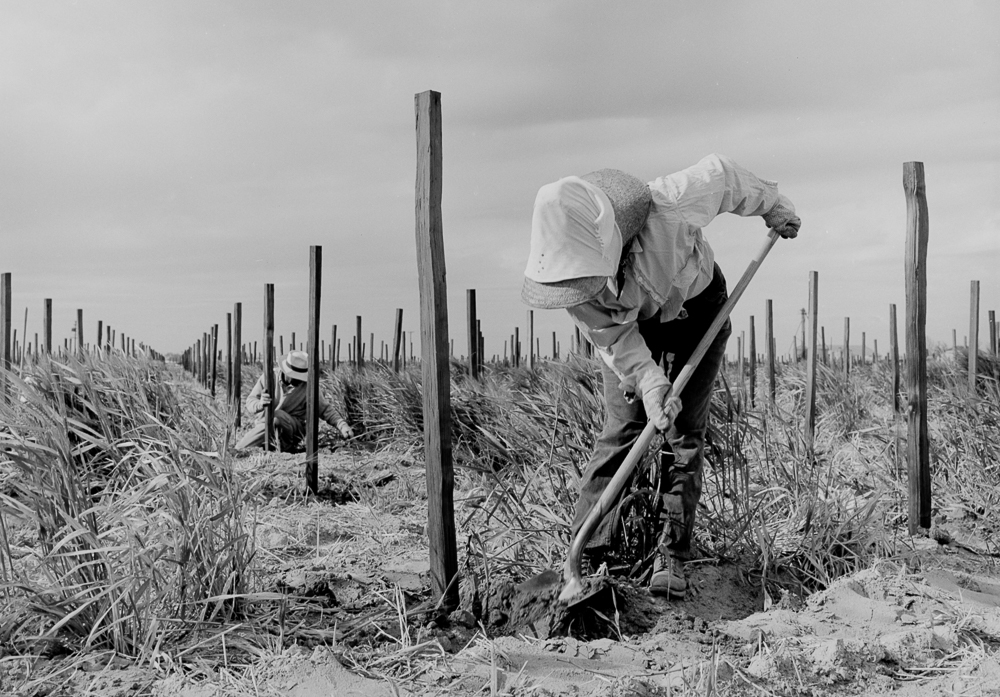
“It was natural for me to combine interviewing for a radio documentary with photography,” Lowe recalled. “I’d just walk up to people in a camp or an orchard and say, ‘I hear you folks are getting a raw deal. I’d like to take your pictures and talk with you so people back in the city can do something about it.’” They very seldom turned him down. (Many of these recorded interviews and finished documentaries are in the Walter Reuther Library at Wayne State University.) Working before conflict erupted, Lowe enjoyed access to vineyards, migrant camps and the inner workings of agribusiness that later photographers were denied. These early pictures also reveal the multi-racial face of migrant labor. Blacks, Anglos, Japanese and Filipinos are pictured, as well as Latinos.

At the end of the first year, Lowe showed his work to Dorothea Lange, who declared, “This is my family album,” and loaned the photographer a 35mm Contax and a gift to cover film and expenses. He traveled up and down the San Joaquin and Salinas Valleys in 1960 to 1963, and 1966, documenting labor camps and shack towns and the grueling work in the rich fields and orchards.

In the fall of 1964, Lowe moved his family to the San Joaquin Valley and spent two months photographing and recording interviews in the unincorporated African-American community of Teviston. This was the first time anyone had documented any of the little known fourteen or more African-American settlements up and down the Central Valley. He also created iconic images of workers picking cotton, some of the last before the mechanical cotton picker displaced them.

In 2015 Lowe returned to two of the Black communities to see if he could find any of the people he’d photographed. He reports the response in South Dos Palos, “At the first house I visited folks came out and started puzzling over my fifty-four year old photos. Soon the front yard was crowded with relatives from the neighborhood and they had named most of the kids in the photos I brought. Laughing about the time capsule I’d brought to them, they photographed my prints with phones and iPads and called distant relatives about their discovery.” In Teviston and Pixley he also found many of the youth he’d photographed in the 60s and their response was equally enthusiastic.

Captured mostly in medium format, Lowe’s images are carefully composed, quiet moments, seemingly frozen in time. Lowe’s people can be monumental—icons of migrant life—but the images are also respectful, intensely personal portraits.

His work in the 60s culminated in a major multi-media exhibit at San Francisco’s deYoung Museum in 1966.

In 2013-14 the UC Berkeley School of Journalism gallery hosted a show of his work focusing on farm worker children.

In 2015 his photos were featured in an exhibition and slide shows at Santa Rosa Junior College.

In July 2018 the Fresno Art Museum opened Black Migrants, an exhibition of Lowe’s photos that will be on the walls until January 6, 2019. 

His images also appear in two PBS documentaries: The Fight in the Fields, Cesar Chavez and the Farmworkers’ Struggle and Adios Amor, the story of Maria Moreno, a charismatic farm worker organizer (PBS broadcast in Fall 2018).

Since the sixties Lowe has worked in varied roles: producer-director in public tv, transpersonal counselor, peace and environmental activist, organizational and sustainable development consultant, and always, photographer and poet. He is currently “harvesting” his life at ernestlowe.com. Contact him at indigoernie at gmail.com

James Carroll

Posted on June 28, 2018 by APAG in Member Profile, News
Central Park, NYC, 1998
At Statue of Liberty, NYC, 1968
Sparks, NV, 1990

Fifth Ave., NYC, 2016
Volunteer Fireman’s Parade, Copake, NY, 1974
Fifth Avenue, NYC, 2008

www.jamescarrollstreetphoto.com

James Carroll was born in Salt Lake City, UT in 1940. He spent his early years in Nevada, California, and Long Island and since then has lived in NYC.

In his 20s he was drawn to the story-telling power of BxW photography and studied with Albert Freed, a disciple of Sid Grossman’s. His teaching, with its emphasis on content and meaning, helped focus Carroll’s approach to photography.

He is mainly interested in people: who they are; their relation to each other; the interrelationship that exists between subject and photographer. Major areas of interest have included children, sub-urban teenagers (‘70s), county fairs and amusement parks, Fifth Avenue (‘90s), Central Park, and the new Times Square.

His work has been published by the New York Times, Population Bulletin, American Prospect,Venture, the Fresh Air Fund, the Ford Foundation, and by numerous college textbook publishers.

Trade publishers that have included his work are Time-Life Books and Eastman Kodak. Photographic publishers include Lightwork, Camera Mainichi (Japan), BxW Magazine, and LensCulture.

His work is in public collections including those of the University of Rochester, the Richard Dry Library of Buffalo, NY, the New York Public Library, and the Bibliotheque Nationale of Paris.
A past recipient of a CAPS grant (NYSCA) to photograph Westchester Co. teenagers, he was also a finalist for the Honickman First Book Prize (5th Avenue essay).

Bonnie Geller-Geld

Posted on April 16, 2018 by APAG in Member Profile
Tennessee Williams signs books at Gotham Book Mart, 1977
Leonard Bernstein, 70th Birthday, 1988
Garry Winogrand, 1983

Mayor David Dinkins greets Arch Bishop Desmund Tutu, 1989
Rudolf Nureyev in rehearsal, 1985
PM Benjamin Netanyahu (at the time Israeli Prime Ambassador) and PM Shimon Peres at the UN, 1985

My career in photography began in 1976. I covered events for newspapers and non-profit organizations as well as photographing in the classical music world. My work includes assignments for The New York Times, The New York Post, The New York Philharmonic, The Juilliard School, The New School, United Jewish Appeal (UJA), Israel Bonds, and The Jewish Theological Seminary. My personal work includes photographs taken at The Gotham Book Mart, the United Nations, in Crown Heights, in and around NYC, in Tannersville, NY, and from my window view of the Hudson River. The majority of my photographs for UJA are in their archive at the Center for Jewish History.

My photographic education began at The Germain School of Photography and continued with study with Philippe Halsman, and Arnold Newman. I taught photography at LaGuardia High School and New York Institute of Technology.

I have been exhibiting my photographs since 1976 with solo shows at The Donnell Library, The Interchurch Center and The Riverdale Y; and group shows at many places including The National Arts Club, Soho Photo Gallery, and Cork Gallery; and internationally in Prague and Edinburgh.

My email address is: Bggeld@gmail.com

My Website is currently under construction. The address is: bonniegellergeld.com

  • «
  • ‹
  • 2
  • 3
  • 4
  • 5
  • 6
  • ›
  • »

APAG

  • Home
  • About
    • APAG Board
  • Membership
    • Members Only
  • News
  • Resources
  • Members Gallery
  • Conference
  • Education
  • Contact

Contact APAG

Contact APAG for membership, information, or with questions:

Visit our Contact Page »

Follow us on Facebook »

All photos on this website are protected by copyright of the individual photographers and archives whose photographs are represented. All rights reserved, and photos are not allowed to be used for any purpose without permission. Please write to the archives or photographers directly for permission requests.

(*) ©2026 APAG – American Photography Archives Group | Site by KPFdigital | Log in