APAG - American Photography Archives Group
  • Home
  • About
    • APAG Board
  • Membership
    • Members Only
  • News
  • Resources
  • Members Gallery
  • Conference
  • Education
  • Contact

Guy Borremans

Posted on August 28, 2015 by APAG in Member Profile
Guy Borremans, James Bay Crees, 1980
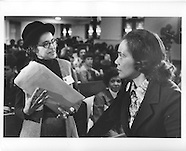
Guy Borremans, Gennevieve, 1960
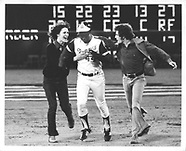
Guy Borremans, Linda rocks, 1980

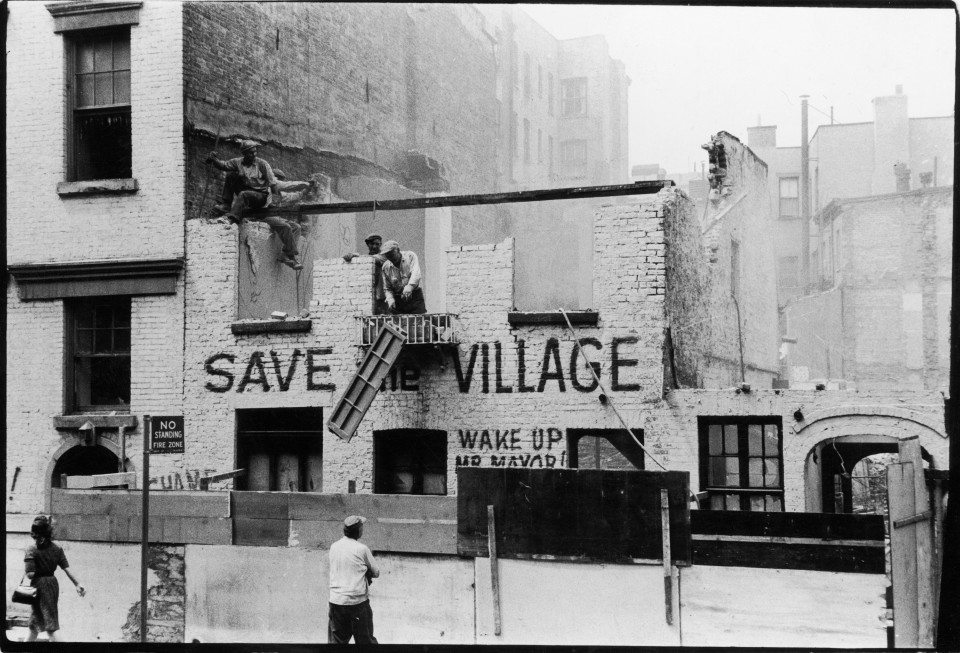
Guy Borremans, Peace walk, 1966
Guy Borremans, Puerto Vallarta, 1972
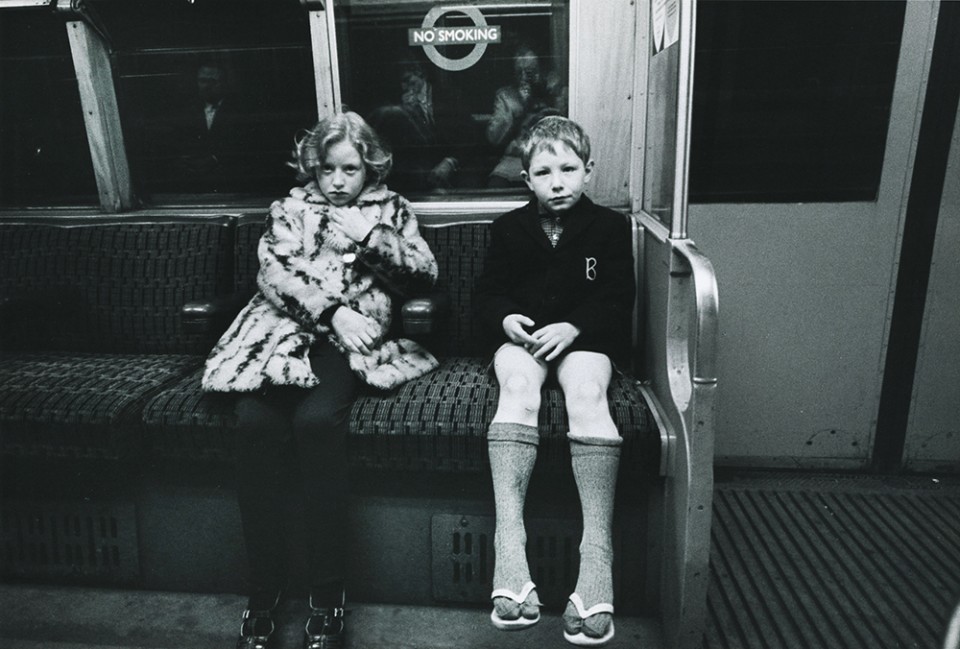
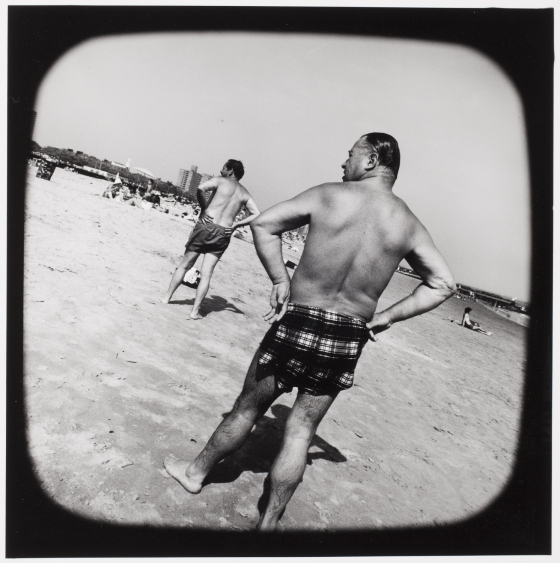
Guy Borremans, Tube, 1965

Guy Borremans (1934-2012) emigrated from Belgium to Montreal in the mid-fifties and established himself as one of the leading photographer and cinematographers in Quebec and in Canada.

After working as a photographer in Belgium, Borremans found work in Montreal as a press photographer and had his first solo photography exhibit in 1956.

He moved to New York City in 1965 to work for the United Nations Film Department, National Educational Television (NET), as well as Movietone and other production companies. He moved back to Montreal in 1968, and worked in still photography. He also taught film and photography at the University of Montreal, Moncton University and Concordia University.

Borremans has contributed to more than forty productions and has held thirty-three solo exhibitions of his photography.

Guy Borremans photographs are in many private and institutional collections, such as the Canadian Museum of History in Ottawa, the Museum of Fine Arts in Quebec City and may others.

Please contact Ariel Borremans for more information.

Ariel Borremans

4828 Hutchison, #2

Montreal, Quebec, Canada

H2V 4A3

514-271-3784

arielborremans@me.com

Up Close with Esther Bubley at the Phillips Collection on August 27, 2015

Posted on August 15, 2015 by APAG in News

 Up Close with Esther Bubley  – Gallery Talk with Jean Bubley

August 27, 2015, 6:30 pm

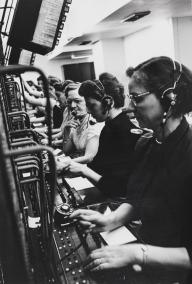
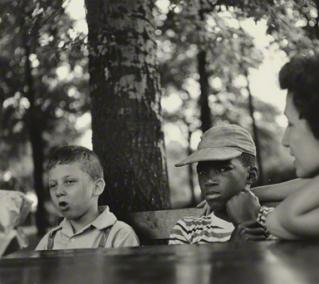
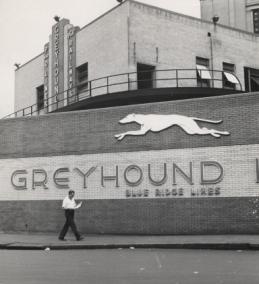
Bubley_General%20Service%20Dept       Bubley_Two%20Boys%20on%20a%20Bench        Bubley_Exterior%20of%20Greyhound%20Bus%20terminal_1

An independent photographer during the heyday of American photojournalism, Esther Bubley documented a wide range of subjects including families and children, industrial installations, and transportation. Her photographs of ordinary life capture the unique personal dimension of seemingly mundane activities. Jean Bubley, director of the Esther Bubley Photography Archive, discusses the work of her aunt Esther Bubley, featured in American Moments.

http://www.phillipscollection.org/events/2015-08-27-gallery-talk

(go to related multimedia on lower right hand side to hear a 2:30 minute talk by Jean Bubley)

Ron Sherman’s ASPP Photo Archive Story

Posted on August 12, 2015 by APAG in News

I0000zY3D9_d1CKAI0000v5h3vQWnDI8

How Universities Can Give Your Photo Collection A SECOND LIFE by Ron Sherman

When I arrived in Atlanta in 1971 and started doing assignments for national, regional and local publications, including Time, Newsweek, Business Week and Georgia Magazine, I did not realize then that I would create a photographic archive that would be valuable enough to be acquired by a an important university library decades later.  This article is a guide for other photographers who have a collection of photographs and are looking for placement of their images.

http://ronsherman.photoshelter.com/gallery/Ron-Shermans-ASPP-Photo-Archive-Story/G0000wTHA40Kc5pA/C0000SeVDCnpoVZU

Save the village: A walking tour of the photographs of Fred W. McDarrah

Posted on July 27, 2015 by APAG in News

Save the Village

RECENT MENTION IN THE NEW YORK TIMES 8/21/15

Save the Village (Tuesday) Last year the Steven Kasher Gallery in Chelsea put on an exhibition with the photography of Fred W. McDarrah, who documented the changing scene of Greenwich Village since the 1960s. Now, the spirit of that show has taken the form of this walking tour, which includes stops at the places McDarrah captured on film: locales like Washington Square Park and the Stonewall Inn. At 10 a.m.; the tour meets at Christopher Park, Stonewall Place, at Seventh Avenue, West Village, savethevillagetours.com.

http://www.nytimes.com/2015/08/21/arts/spare-times-for-aug-21-27.html?_r=0

FOR IMMEDIATE RELEASE

PLEASE CONTACT: info@savethevillagetours.com or 917 975 4415 (MEDIA ONLY)

SAVE THE VILLAGE: A WALKING TOUR OF THE PHOTOGRAPHS OF FRED W. McDARRAH

TO KICK OFF AUGUST 4.

Based on the blockbuster show at Chelsea’s Steven Kasher Gallery, these unique walking tours don’t bring people to a gallery, but instead to the downtown locales documented by the longtime Village Voice photographer and picture editor Fred W. McDarrah – and the stomping grounds of the individuals he photographed that helped shape the 1960s ethos, including Bob Dylan, Andy Warhol, Jack Kerouac, Jimi Hendrix, Norman Mailer, Allen Ginsberg and many more.

During his 50-year association with the Voice – the world’s most famous alternative newspaper and the house organ of the postwar counterculture – McDarrah amassed a 250,000 image archive that is an encyclopedic catalog of the people, places, movements, trends and events of the New York scene over the second half of the 20th century. So many individuals and groups came to the Save the Village gallery show, and staffers were peppered on a daily basis with so many questions about the photos and the changing face of Greenwich Village and the convulsions of the culture that McDarrah captured… The exhibition ended, but the interest in the Village in the ’60s and McDarrah’s documentation of the changing scene did not wane one bit.

Now, tour-goers will get a multi-postcard set of some of the most iconic of McDarrah’s images and see the exact same places today, including the townhouse on West 11th St. blown up by the Weather Underground, Electric Lady studios, the Stonewall Inn, Christopher Park, Judson Church and Washington Square Park.

Other tours in the series include The Beats, The Artists World and The East Village.

If Greenwich Village is the historic home of the counterculture, then the East Village can be called famous for its off-the-counter culture. On this tour, see where Chicago 8 defendant Jerry Rubin paraded down St. Mark’s Place with a machine gun; the Polish catering hall where the Velvet Underground played its first gigs, the original home of the Fillmore East concert hall, and more.

The Artists World tour is based on a 1961 McDarrah book that is often the sole visual record of a special time and place in the history of American art. The tour visits the East 10th St. Gallery Row where de Kooning had his studio and the nearby neighborhood spots where artists including Franz Kline, Ad Reinhardt, Joan Mitchell, Lee Krasner, and Adolph Gottlieb lived, worked, played, exhibited and famously drank.

The Beats tour will visit the coffee houses, clubs, and other venues (some remaining, some not) where Jack Kerouac, Allen Ginsberg, Gary Snyder, Peter Orlovsky, Diane DiPrima, Gregory Corso and William S. Burroughs made literary history.

In addition, all tours are available for private bookings; custom or combination tours can be arranged.

Tickets are $15 (Students, seniors, individuals with a valid library card, or a membership in a Historic

Preservation Society, Group or Association) to $25 (Adult) and every ticket includes a keepsake postcard packet.

For tour schedules, to make reservations and for more information, go to SaveTheVillageTours.com.

Joe Schwartz

Posted on July 26, 2015 by APAG in Member Profile
Tricycle Gang, 1940’s
Miss America, 1948
Work-Done-A-Flight-Begun, 1940’s

Twos-a-Team, 1940’s
Does Discriminate, 1940’s
Sullivan Midgets, 1930’s

Joe Schwartz
1913 – 2013
Home page: http: //www.joeschwartzphoto.com
Archive contact: Paula Motlo – joeschwartzphotos@gmail.com

Joe Schwartz (American, b. July 6, 1913 – d. March 13, 2013) was born to immigrant
parents from Eastern Europe, on the top floor of the tenement building at 47 Humboldt
Street in Brooklyn, New York. “Baby” Schwartz began his new life as a “have-not” …
and the “have-nots” were the very people that he chose to photograph during his
lifetime. Joe’s camera became his notes, sketches, diary, memory identifiers, and his
key to the many doors he was afraid to open without the use of the lens. His camera
was used, not as an intruder, but as a participant in each scene.

In the 1930s, David Robbins introduced Joe to the Photo League of New York. It was
there he interacted with the “greats” such as, Margaret Bourke-White, Dorothea Lange,
Ruth Orkin, and Walter Rosenblum. Joe was strongly influenced by the League’s high
standards and humanitarian values. He interacted with many dedicated artists in the
League and pursued his passion – documenting through photography, life on the streets
of New York as well as other areas of America. Joe’s photos captured the dignity of the
“unfortunates” and showed that hope still burned bright in the bellies of the immigrants
and the American Blacks. While focusing on inter-racial cooperation and understanding,
Joe fulfilled his vision – to serve as a philosopher of hope rather than a messenger of
despair.

Joe married in 1939; he served as a combat photographer on Iwo Jima during World
War II; and as a staff member of Leatherback Magazine. During the war his photos were
printed in several notable publications; and in 1946, Joe was a recipient of the Best
Picture of the Year award. Joe graduated from the Fred Archer School of Photography;
worked as a lithographer; owned Color Magic, a successful print shop; and published
his own photography book, Folk Photography: Poems I’ve Never Written.

Schwartz’s photographs have been widely exhibited. His works are part of the
permanent collections at: Smithsonian National Museum of African American History
and Culture (open to the public in 2016 at the National Mall); J. Paul Getty Museum;
Museum of Modern Art New York; Skirball Cultural Center of Los Angeles; Houston
Museum of Fine Arts; National Gallery of Canada; Santa Barbara Museum of Art;
Columbus Museum of Art; Harn Museum in Arizona; and Center for Creative
Photography at the University of Arizona.

Photo captions:

1. TRICYCLE GANG – 1940s, photo by Joe Schwartz – Herkimer Street, Bedford-Stuyvesant, Brooklyn, New York, p.91
2. SULLIVAN MIDGETS – 1930s, photo by Joe Schwartz – Sullivan Street, Greenwich Village,  Lower Manhattan – Italian street gang – “Nothing creative to do – nothing to be proud of -except to act tough – Kid-Folk seek low-grade excitement to vent their energies and anger.” p.66
3. MISS AMERICA – 1948 – Ocean Hill, Bedford-Stuyvesant, Brooklyn – “African American girl at a patriotic gathering.” p.16
4. DOES DISCRIMINATE – 1940s – Ocean Hill, Bedford-Stuyvesant, Brooklyn – “National Negro Congress, Citizens Affairs Committee – First black women to picket chain (Woolworths) for jobs. p.116
5. TWO’S A TEAM – 1940s – Kingsboro Federal low cost housing project, Ocean Hill, Bedford-Stuyvesant, Brooklyn – (a mural of this photo is currently on display at the National Mall in Washington D.C. in front of the new Smithsonian National Museum of African American History and Culture that’s being built). p.41
6. WORK DONE, A FLIGHT BEGUN – 1939 – (year of the New York’s World Fair) – Soho district Remembering the Photo League of NYC – 18 Saint Marks Place – Sign: “Accordion Repairing” – Man on stairs, a window shade repairman, has a bag full of window shades. p210


Charles Traub featured in ICP blog Fans in a Flashbulb

Posted on June 25, 2015 by APAG in News

traub_charles_294_1981d traub_charles_294_1981f

Charles H. Traub: Beach portfolio

by claartjevandijk

https://fansinaflashbulb.files.wordpress.com/2015/06/traub_charles_294_1981d.jpg

Alexander Artway

Posted on June 21, 2015 by APAG in Member Profile
Hippo by Alexander Artway
Coney Island by Alexander Artway
Central Park by Alexander Artway

Grand Central by Alexander Artway
New York by Alexander Artway
photo of Alexander Artway

Alexander Artemiev was born March 25, 1903 in Gomel, Belarus, Russia. He was the youngest child of nine children. His prosperous family educated him in the gynazium where his older brother was the principal. Russia was in great turmoil in 1917, and Alexander, as well as so many others, was caught up in these changing times. He fought as a young teenager in the White Army. He said he liked the uniform and had to do this for his family’s land and property. In the army he was wounded in his left leg, which gave him trouble all his later life. He fled and went into exile for many years in Europe (Belgrade, Prague, Paris), until he was able to enter America. He arrived at Ellis Island in June of 1922 under the name Alexander Artway.

For the next 18 years Artway remained in New York City. He had to learn a new life; adjusting from living on a sprawling Russian farm to very close urban quarters. He worked more with his hands than with his mind, since his European degrees were meaningless in the United States. Away from all family but his brother John (Sergei), Alexander had to seek out new connections. He found Lena, a woman whose family was still in Ukraine. The two explored the city together and carried on an affair that lasted many years.

In New York, Artway was very fascinated by the skyscrapers going up. He recorded these buildings from every angle and rooftop, and perhaps even from airplanes. He attended and taught at NYU, taking a degree in architecture in 1934. Before going to NYU (with the aid of an organization called the Russian Student Fund) he joined the Merchant Marines. He later became a captain of ships and sailed around the world taking pictures of the foreign lands he visited. There are many beautiful studies of skies, clouds, and the ocean. He saw much more of the world than the average person of these times and led an unconventional life.

From his photographs it appears he was both excited and lonely. From his letters we can see that he was very attached to his mother and family back home. In fact, he returned to Russia in 1936 and ’37 to see them, a very risky business. The photographs from this trip to Gomel are touched by a tenderness and nostalgia found nowhere else in his work; they paint a picture of a man returning to his true roots. Even though he is pictured in these photographs in his New York City fine suits and hats, hair-line receding, one can spot a little boy’s grin in the photographs of Alex and his mother.

He documented New York City life yet avoided photographing people he did not know. He recorded city streets, friends, his love life, animals, churches, and of course, architecture. His eye was unique, and his negatives are marked by a modernist aesthetic with a touch of pictorialist romanticism. He photographed nearly compulsively for about 15 years and only slowed down after the birth of his first child. In Philadelphia he became a true family man, and the photographs after 1942 are reflective of Artway’s new identity.

It seems unlikely Artway could have imagined the form which his photographs now take. For him, they were a record of his life, of the compositions he saw around him, of a life well-lived. Now they form the Alexander Artway Archive made up of 4,000 negatives and 3,000 prints all neatly organized in plastic sleeves and black boxes. These are his legacy to his daughter Jeanette. The photographs from Russia, the portraits of his family and friends have become her heritage and her link to a family she’s never known. Now, as we begin to share these images with the public, we hope the photographs will become the heritage of many others. They tell the story of the trials and triumphs of an adventurous immigrant forging a life in America.

For more information please visit our website at www.alexanderartway.com or contact alexanderartwayarchive@gmail.com.

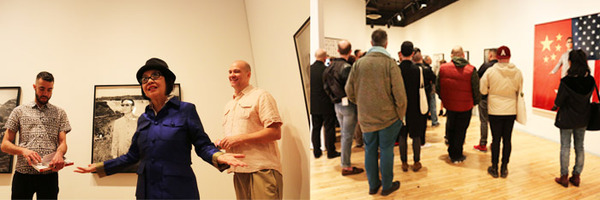
Conversation about Tseng Kwong Chi exhibit on 6/25/15 at the Museum of Chinese in America, and Muna Tseng walk-throughs on Weds nights

Posted on June 15, 2015 by APAG in News


MOCA

CONVERSATION: DORYUN CHONG AND HERB TAM ON TSENG KWONG CHI

THURSDAY, JUNE 25, 2015 AT 6.30 PM – 8.00 PM
MUSEUM OF CHINESE IN AMERICA
215 CENTER STREET, NEW YORK CITY

Doryun Chong, chief curator, M+ Hong Kong, and Herb Tam, curator and director of exhibitions, Museum of Chinese in America, will discuss Tseng’s life and art in New York, his influence on younger Chinese artists, and how his cultural identity may have impacted his work.

Generously supported by the Asian Cultural Council. Co-sponsored by the Museum of Chinese in America and NYU’s Grey Art Gallery.

Banner%20Muna%20Tours_crowd

Muna Tseng will offer walk-throughs of the exhibition “Tseng Kwong Chi: Performing for the Camera” on Wednesday nights in the month of June. Please RSVP with your date to reserve your spot. The tour from 7.00 to 7.30 pm FREE.

Exhibition on view: APRIL 21 – JULY 11, 2015
GREY ART GALLERY, NEW YORK UNIVERSITY
100 WASHINGTON SQUARE EAST, NEW YORK CITY

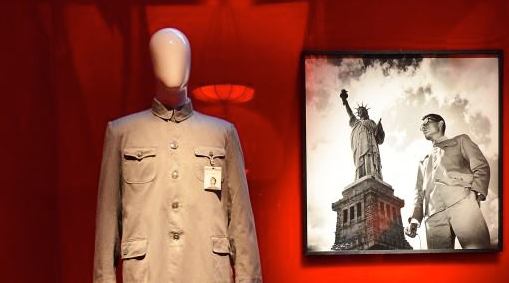
Tseng Kwong Chi’s “Mao Suit” and photograph are part of the Metropolitan Museum’s exhibit “China Through the Looking Glass”

Posted on May 15, 2015 by APAG in News

TsengKwongChi

CHINA: THROUGH THE LOOKING GLASS
EXHIBITION ON VIEW: MAY 7 – AUGUST 16, 2015
THE METROPOLITAN MUSEUM OF ART, NEW YORK

Tseng Kwong Chi’s “Mao Suit” and photograph from his East Meets West series are part of the exhibition China: Through the Looking Glass at the Metropolitan Museum of Art. In this collaboration between The Costume Institute and the Department of Asian Art, high fashion is juxtaposed with Chinese costumes, paintings, porcelains, and other art, including films, to reveal enchanting reflections of Chinese imagery.

http://www.metropolitanmuseum.org/

George Tice to receive the LUCIE AWARD for Lifetime Achievement on 10/27/15 at Carnegie Hall

Posted on May 14, 2015 by APAG in News

Portrait_George_Tice_-¬-Lisa-Tice

George Tice

2015 Honoree: Lifetime Achievement Award  – LUCIE AWARDS

October 27, 2015 – Zankell Hall, Carnegie Hall, NYC

George Tice has been working in the field of photography for more than 60 years, focusing his camera on the American rural and urban landscape. He is drawn to vestiges of American culture on the verge of extinction – from people in rural or small-town communities to urban and suburban neighborhoods that are often in decline.

Tice was born and raised in Newark, New Jersey in 1938. At fourteen, he joined the Carteret Camera Club and later worked as a darkroom assistant for a Newark portrait studio. After enlisting in the U.S. Navy at age seventeen, Tice’s talent quickly promoted him to Photographers Mate Third Class. One of his images of an “Explosion Aboard the U.S.S. Wasp, 1959” was acquired for the Museum of Modern Art by photographer Edward Steichen. After his navy service Tice worked as a home portrait photographer for the next decade.

In the 1960s, Tice shifted from smaller camera formats to larger ones, which enabled him to craft finely detailed prints. George Tice is considered a virtuoso of the fine print, and a master printer, not only of his own work, but for others for whom he has made fine prints. During this time, he met Lee Witkin and helped establish the Witkin Gallery, the first commercially successful gallery in New York dedicated to fine art photography. The association with Witkin also led to Tice printing limited-edition portfolios of some of his favorite photographers, among them Edward Steichen, Edward Weston and Fredrick H. Evans, as well as other important photographers including Francis Bruguiere, Ralph Steiner and Lewis Hine.

By 1970, thanks in part to shows and sales of his work through Witkin, Tice was able to concentrate entirely on his own photography. The extended photographic essay is an important part of Tice’s work. The form and process of each project is an investigation leading to a book. Tice taught a master class at The New School, NYC and the Maine Media Workshop for over twenty-five years.

Tice has had eighteen books published to date. His first book Fields of Peace, documented the life of Amish and Mennonite communities of Pennsylvania. In the late 1960’s, Tice began exploring his home state and those photographs formed the beginnings of two of his best-known books: Urban Landscapes, A New Jersey Portrait, (1975) and Paterson, (1972), with sequels, George Tice : Urban Landscapes in 2002, Common Mementos in 2005 and Paterson II in 2006. His most recent book Seldom Seen (2013) is a collection of previously unpublished photographs. James Rhem states in an article in Focus Magazine, “The stillness in what Tice himself describes as the “sad beauty” of his urban scenes has a different weight, the weight of history, not moments, but stories evolving.”

His photographs have been exhibited internationally and are represented in the collections of many institutions including the Metropolitan Museum of Art, Museum of Modern Art, Art Institute of Chicago, The Getty Museum, Whitney Museum, Newark Museum and the Bibliotheque Nationale. He has received fellowships and commissions from the Guggenheim Foundation, the National Endowment for the Arts, the New Jersey State Council on the Arts and the National Media Museum, (UK). In 2003, he received an honorary Doctorate of Humane Letters degree from William Paterson University.

Tice, a 10th generation New Jerseyan, makes his home on the Jersey Shore.

http://www.lucies.org/honorees/george-tice/

  • «
  • ‹
  • 12
  • 13
  • 14
  • 15
  • 16
  • ›
  • »

APAG

  • Home
  • About
    • APAG Board
  • Membership
    • Members Only
  • News
  • Resources
  • Members Gallery
  • Conference
  • Education
  • Contact

Contact APAG

Contact APAG for membership, information, or with questions:

Visit our Contact Page »

Follow us on Facebook »

All photos on this website are protected by copyright of the individual photographers and archives whose photographs are represented. All rights reserved, and photos are not allowed to be used for any purpose without permission. Please write to the archives or photographers directly for permission requests.

(*) ©2026 APAG – American Photography Archives Group | Site by KPFdigital | Log in