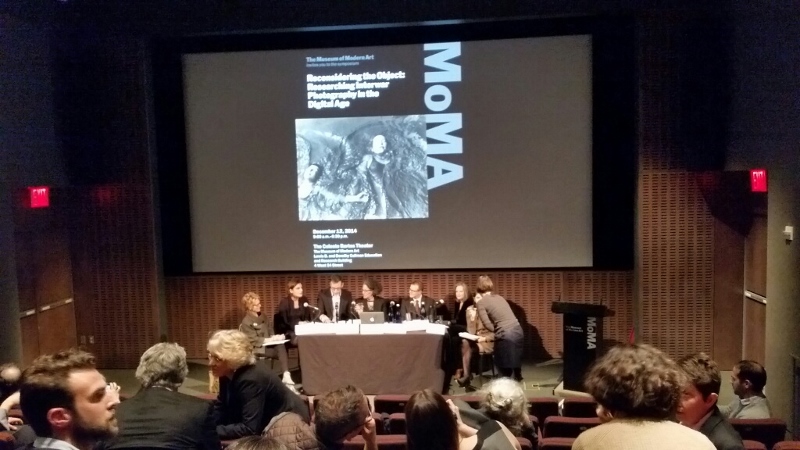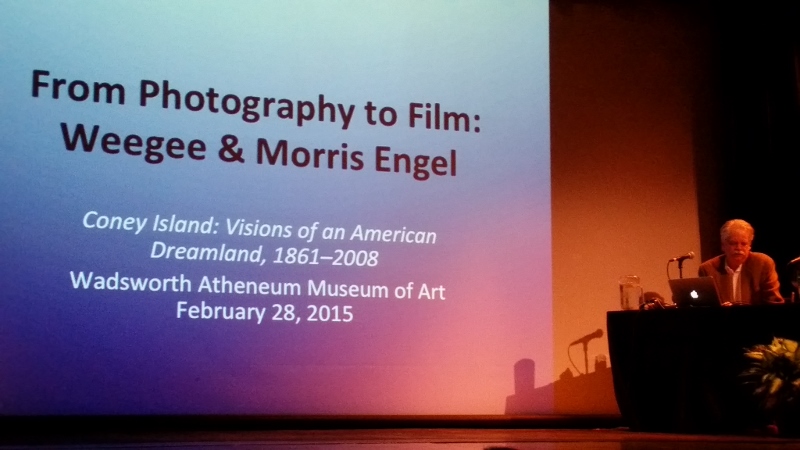
Mary Engel’s blog – Recent Symposiums
| I am thrilled and humbled to announce the MacDowell Colony has awarded me a Fellowship for the 2015 Summer Residency. Their tagline is “Freedom To Create” — which is exactly what I’ll be doing. Using the studio’s darkroom, I will revisit, edit and print my early (1974-82) B&W negatives. Although the early edit led to solo exhibitions, the fellowship offers the opportunity to prepare an updated portfolio for galleries and museums. It will also be a fascinating opportunity to look through the prism of time to see what the imagery says now about that era. |
With artists like Cindy Sherman, Julian Schnabel and Jeff Koons making big waves, the 1980s were an explosively creative time for art. It was a fractious period, too, as artists and critics espoused or decried neo-Marxist theories as the art market boomed.
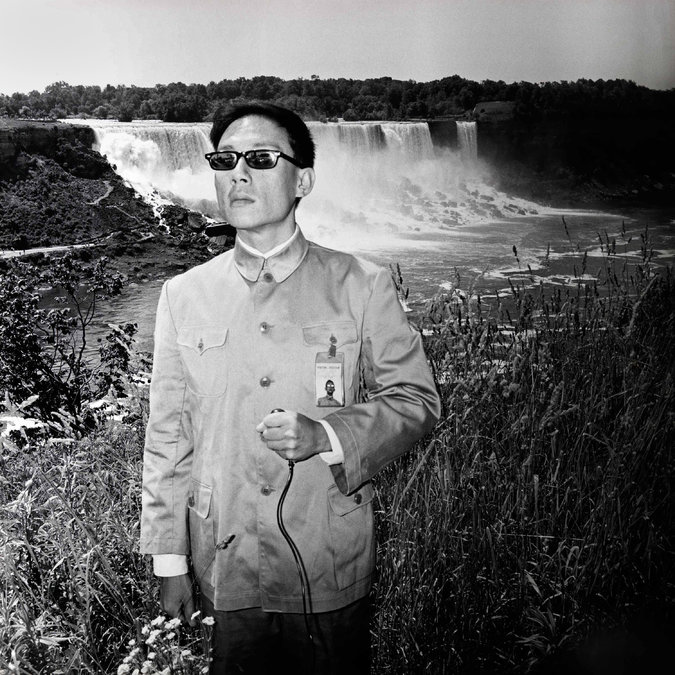
Lots of less famous artists had supporting roles in the tumultuous drama of New York art back then. “Tseng Kwong Chi: Performing for the Camera,” an entertaining and edifying exhibition at the Grey Art Gallery, surveys the brief but prolific 10-year career of one of the decade’s more scintillating but lesser-known players. Presenting more than 80 photo-based pieces, the show was organized by Amy Brandt, curator of modern and contemporary Art at the Chrysler Museum in Norfolk, Va., where it will be shown in August.
In 1979 Tseng Kwong Chi began to create his most memorable works: two photographic series, “East Meets West” and its follow-up, “Expeditionary Series,” in which he appeared in dark glasses and a Zhongshan suit, the uniform favored by Mao Zedong. Thus outfitted, he posed in front of famous monuments like Mount Rushmore and the Eiffel Tower and natural wonders like Niagara Falls and the Canadian Rockies.
Read full article…

Julie Grahame
Last month, writer Sarah Coleman published an article in Photography District News on archival best practices, which included quotes from Mary Engel on directing the Ruth Orkin and Morris Engel Film and Photo Archive. Coleman continued the conversation with Mary on her blog, The Literate Lens, discussing Morris’s and Orkin’s lives, work, and influences; how Mary came to run the archive; and the formation of APAG.
“Legacy Keeper: An Interview with Mary Engel” by Sarah Coleman.
Street Photography Magazine recently published an essay about Len Speier’s series of photographs while riding the M5 bus, which runs the length of Manhattan from the George Washington Bridge all the way down to South Ferry Terminal. The article can be read in PDF format by following this link: Len Speier and the M5 Bus.
Below are some photographs from recent exhibitions of Speier’s work in New York, Vermont, and Los Angeles.
Ali website Blog by Peter Angelo Simon
4/2/2015
The knocking and the voice came through my motel door at 4:30 a.m. “Grab your pants and your camera, the champ is running!” The sun was just breaking through the trees when I jumped out of the car and began shooting. Muhammad Ali was ahead of me jogging along the rural Pennsylvania black top, his breath visible in the early morning cold. A cow watched from a field of daisies as he passed.
I was in and out of the car, not up to running five miles before breakfast. As he ran by a cornfield, Ali raised his arms in a victorious salute .
At the end of the run he jabbed at the air and danced in the road, cooling down, with me shooting all the while. “Get this,” he said. I raised my camera positioning for a vertical. Ali pulled up his sweatshirt and the rubber liner inside it. As I shot water poured out. “It’s called letting out the sweat,” he said. At that moment I realized that Ali had got me. He understood that I was not interested in him posing and mugging for the camera but in observing the reality of his process of preparation for the comeback heavyweight world championship fight in Africa a month away.
The people genius was right. I was writing public affairs documentary films for television when I discovered my how much excitement and pleasure photography gave me. Edward R. Murrow had said television was like reporting with a one-ton pencil. Now the pencil weighed 33 pounds with camera and recorder unattached but in sync. The Living Camera verite films that Ricky Leacock, D.A. Pennebaker, and a few others were making were devoted to capturing “the feeling of being there.” And that was precisely what I aspired to do with still photography.
I was astounded by what I found at Ali’s camp. “If there’s a secret to my fights, it’s how I prepare,” Ali had said. The place had an air of artistry and imagination: log cabins, magic tricks, huge power stones bearing the names of boxing greats, poetry and humor. In the next two days I went everywhere with Ali: an old people’s home; an exhibition match; watching him practice the “Rope-a-Dope;” taking tea and talking poetry with a visitor. I shot 33 rolls in those two days. Ali said nobody had ever taken so many pictures of him.
In 1974, Muhammad Ali was notoriously fast on his feet and quick with his tongue. Today speech and movement are a challenge. Well wishers worldwide continue to cherish his spirit and take inspiration from his extraordinary life.
# # #
A legendary New York Times photographer who spent nearly 40 years capturing New York City at it’s finest moments is focusing his famous lens on a new project. NY1’s Cheryl Wills filed the following report.
From his immaculate stoop in Fort Greene, Chester Higgins marvels at how his neighborhood has changed over the four decades that’s he’s lived there. But not to worry he’s captured every moment.
He was still in his pajamas when he snapped a snowy shot that graced the paper of record, above the fold. And one of the Brooklyn Bridge that the Times tinted red for Valentine’s Day in the 1980s.
“I found the one place where I could get a little sun coming through the fog,” recalls Higgins.
Higgins spent 38 years at The New York Times capturing New York at its finest moments. He retired from the paper in December but he’s not really retired. He’s still working on new projects like one he calls Apparitions – leaves from his trees in the backyard.
His images spoke volumes and one might say helped to elect an underdog mayor in 1989. When David Dinkins ran for mayor in New York City Higgins was the only photographer who volunteered to cover his campaign from start to finish.
“You tend to learn how to be sensitive to the long shots,” says Higgins.
He is also sensitive to African causes. He’s documented Africa in all of its splendor and also photographed Nelson Mandela numerous times. But his passion was not the larger than life figures. He relished ordinary folks, people he met on the street like one woman who stopped him dead in his tracks in Brooklyn.
“The calmness of her, and her beauty I thought just said it all,” says Higgins.
Chester Higgins says he will continue to do what he does best, whether it’s from his perch in Brooklyn or a remote hamlet in West Africa.
APPARITIONS by Chester Higgins Jr.
Kobek – copyright Chester Higgins Jr.
http://www.loeildelaphotographie.com/2015/02/24
To see more work from this series
http://www.chesterhiggins.com/portfolios_artists.html?gallery=portfolios_apparitions