APAG - American Photography Archives Group
  • Home
  • About
    • APAG Board
  • Membership
    • Members Only
  • News
  • Resources
  • Members Gallery
  • Conference
  • Education
  • Contact

William Helburn

Posted on December 8, 2020 by APAG in Member Profile
Sharon Tate Pear
Bus Top
Red Canoe

Dovima Under the El
Chrysler New Yorker
Jean Shrimpton Radish


WILLIAM HELBURN BIOGRAPHY

For more than two decades William Helburn’s playful, sexy images were everywhere.  A contemporary of Avedon, Penn, Bassman and Horst, Helburn strove to create startling images that would spring off the page, often juxtaposing the sublime with the absurd. “Shock value was a term that was used,” says Helburn “And I meant to shock people as much as I could.”

Starting in 1949, Helburn photographed style for Harper’s Bazaar, Esquire, Life and Town & Country – and brought style to ads for Coca-Cola, General Motors, Buick, Revlon and Supima, working with Doyle Dane Bernbach and New York’s other ground-breaking agencies.  A “first-call” photographer at the heart of advertising’s creative revolution, Helburn brought a fashion photographer’s sensibility to everything he caught in his lens.

“I think fashion photography is, singularly, the most creative form of photography there is,” said Helburn of his art. “The fashion photographer always has so much of his inner self, contributing. His taste. His inner being … I didn’t think of myself as other than that.”

William “Bill” Helburn was born in New York City in 1924. After serving in the Pacific in World War II, Helburn was inspired to become a fashion photographer after then-partner Ted Croner encountered model Lisa Fonssagrives posing naked in the snow, in a test shoot for her husband Fernand.  Both Croner and Helburn would go on to study with Harper’s Bazaar art director Alexey Brodovitch at his Design Laboratory; Helburn’s work lead to a 10-page assignment for Bazaar that helped launch his career.  Helburn would go on to publish thousands of images and win dozens of awards for his fashion and advertising photography. William Helburn’s first book, published in 2014, is “William Helburn – Seventh and Madison”.   His photography has been shown in galleries and art shows around the world. William Helburn died November 3, 2020, in Connecticut. He was 96

For more information, contact:

Bob Lilly, Lilly Global Media

718-928-5899

bob@lillyglobalmedia.com

www.williamhelburn.com

APAG quoted in INSIDE PHILANTHROPHY

Posted on September 26, 2020 by APAG in News

Excerpt from article

“Visual Arts Organizations Scramble to Survive Fundraising. Many Won’t survive.

INSIDE PHILANTHROPHY

By HOLLY HALL – September 2020

Questions of Survival

But other visual arts organizations are struggling, and many will not survive. In a June survey of more than 750 museum directors, the American Alliance of Museums found that one out of every three museums is in danger of permanent closure as revenues and financial reserves dry up. These closures “will be devastating for communities, economies, education systems and our cultural history,” the alliance’s president, Laura Lott, said in a statement.

More than 85 percent of museums had 12 months or fewer of financial operating reserves, the survey found, with more than half reporting less than six months’ worth of reserves. Even if their institutions survive, more than 60 percent of directors predict they will be forced to reduce education, programming or other services.

When museums shut down, it’s not just the loss of galleries that draw museum-goers, says Edwards at the Frist in Nashville. “A lot of these organizations provide after-school programs,” she says. “We provide after-school arts programs, and we’ve sent out people to give presentations for kids who would otherwise be without. We do other programs for seniors and others with special needs. If you lose one-third of these kinds of resources, it is a major blow to the entire country.

Among those struggling the most to raise money now are small visual arts organizations. Mary Engel runs a New York photography archive showcasing the work of her deceased parents, Ruth Orkin and Morris Engel. Their daughter founded the American Photography Archives Group in 2000. APAG is a charitable organization seeking donations on behalf of more than 200 photo archives, photographers and collectors, a few from overseas. Engel says APAG has such a small budget, just $30,000, that it was unable to get a coveted archive grant from the Andrew W. Mellon Foundation. Mellon supports the arts, but for this specific grant, required visual archives to have a budget of $50,000 or more.

“I find it cumbersome to do grant applications,” Engel says. “A lot of funders don’t give general operating support. I find this very frustrating.” At one grantmaking organization founded by photographers, she recalls, “a major benefactor wanted me to use money in a way that made no sense, given COVID.” Though that benefactor relented when Engel explained her objections, the back and forth can be stressful and time-consuming.


Rodney Smith

Posted on September 24, 2020 by APAG in Member Profile
Saori on Sea Plane Wing, 2010
Edythe and Andrew Kissing on Top of Taxis, 2008
Don Jumping over Hay Roll No.1, 1999

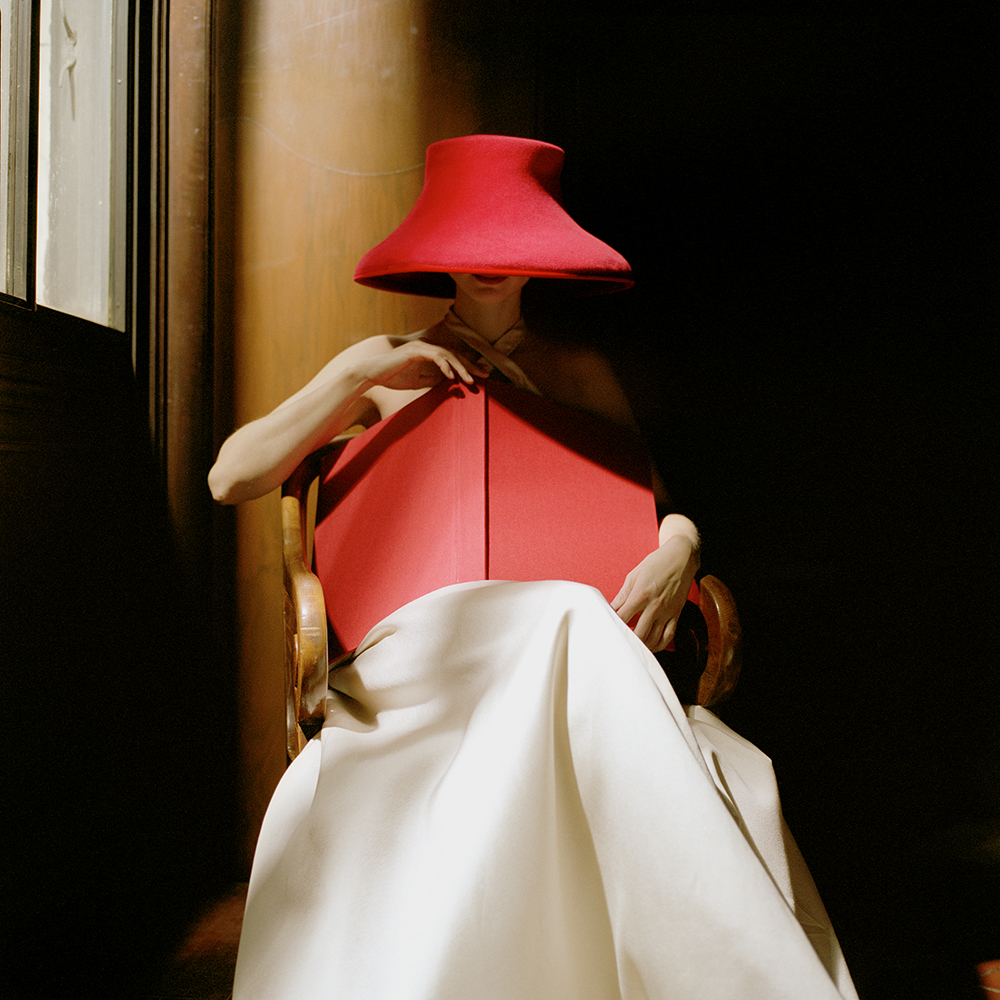
Bernadette in Red Hat with Book, 2003
A.J. Looking over Ivy-covered Wall, 1994
Twins in Tree, 1999

Rodney Lewis Smith was a prominent American photographer, celebrated for his iconic and meticulously crafted photographs that combine portraiture and landscape. Using only film and light, Smith created enchanted worlds full of subtle contradictions and surprises. Smith’s magical images are instantly recognizable for the way they combine surrealism, style and humor.

His work has been seen everywhere, from the NY Times Magazine, Vanity Fair and Departures to Architectural Digest. Smith passed away unexpectedly at age 68, leaving behind a large archive of work now being discovered. His photography is collected by major museums, including the Museum of Fine Arts, Boston, Philadelphia Museum of Art and the Houston Museum of Fine Arts, and by individuals around the world. 

Publications of Smith’s work include Rodney Smith Photographs, In the Land of Light, The Hat Book, The Book of Books and The End.
contact:
Leslie Smolan – leslie@rodneysmith.com 
Patricia Barrett – patricia@rodneysmith.com
www.rodneysmith.com 

“48 Hours with Muhammad Ali” featuring Peter Angelo Simon’s photographs

Posted on September 22, 2020 by APAG in News

Photographs featured in this film by APAG member PETER ANGELO SIMON

Heres a link to the film, anyone can watch it from here but cannot download it:

https://vimeo.com/376820079/b6d553215d

Heres a link to the IMDB page, please leave a review if you want. ‘

https://www.imdb.com/title/tt7475202/?ref_=nm_flmg_dr_1

unnamed.jpg
Screen Shot 2020-09-21 at 2.01.36 PM.png

LA Shorts International Film Festival

Lashortsfest.com

Streams online Oct 2-31.

Alisfightersheaven.com 

Rodney Smith article

Posted on September 22, 2020 by APAG in News
Edythe and Andrew Kissing on Top of Taxis, 2008
Bernadette in Red Hat with Book, 2003
Twins in Tree, 1999

Article in MEDIUM FORMAT – September 2020

THE INCREDIBLE WORLD OF RODNEY LEWIS SMITH

An interview with Leslie Smolan and Patricia Barrett –

Creative Partners of Rodney Smith

by Olaf Sztaba

Read the article

Jurgen Schadeberg obituary

Posted on September 21, 2020 by APAG in News
Very sad news about the passing of APAG member Jurgen Schadeberg. As I mentioned in an earlier post, Claudia Schadeberg has been a regular attendee at our Zoom meetings during the pandemic, and we were honored to have Jurgen join us for one as well. We had just asked him to speak at a future meeting, but unfortunately we were too late. Deepest condolences to his wife Claudia, son Charlie and their entire family. ❤️
Mary Engel – Founder and President, APAG

THE GUARDIAN

https://www.theguardian.com/artanddesign/2020/sep/17/jurgen-schadeberg-obituary

CNN

https://edition.cnn.com/2020/09/01/africa/jrgen-schadeberg-apartheid-photographer/index.html?fbclid=IwAR0KYCzK-dhjFvxneJqzUkqTAjhYMLMHd3JU-dpVvZjYJeH9T3dsfZc_cX4

THE NEW YORK TIMES

Leigh Wiener

Posted on June 2, 2020 by APAG in Member Profile
Johnny Cash – Copyright Leigh Wiener
Billie Holiday – Copyright Leigh Wiener
Igor Stravinsky – Copyright Leigh Wiener

Rooster – Copyright Leigh Wiener
Sandy Koufax – Copyright Leigh Wiener
John F. Kennedy – Copyright Leigh Wiener

ABOUT LEIGH WIENER
Born and raised in New York City, Leigh Wiener was the son of a newspaperman. His early interest in photography was cultivated by family friend Arthur Fellig (aka “Weegee”), who was famous for his gritty street photography. By the age of 14, Wiener sold his first commercial photograph to Collier’s Weekly.
In 1946, he moved to Los Angeles. After graduating from UCLA, Wiener joined the Los Angeles Times as a staff photographer. His years there were interrupted by military service in Europe as an Army photographer for Stars and Stripes. He would go on to establish his own company in 1958 and, in a career that spanned decades, produce front-page photos and photo essays for the world’s most prestigious newspapers and news magazines of the era such as Life, Paris-Match, Fortune, Time, The Saturday Evening Post and Sports Illustrated. His subjects came from every facet of life, including presidents, industrialists, Hollywood legends, musicians, sports figures, and scientists.
His work would expand to television, producing and shooting the award-winning football documentary, “A Slice of Sunday,” and creating and producing the Emmy Award-winning NBC-TV series “Talk About Pictures” which he co-hosted with George Fenneman.
He taught classes at UCLA and published 9 books featuring his work. Leigh Wiener’s photographs are in the permanent collection of the National Portrait Gallery among others.
https://www.leighwiener.com
http://en.wikipedia.org/wiki/Leigh_Wiener


Edna Bullock

Posted on May 27, 2020 by APAG in Member Profile
Garbaage Cans, 1983
Models, 1983
Driftwood, 1978

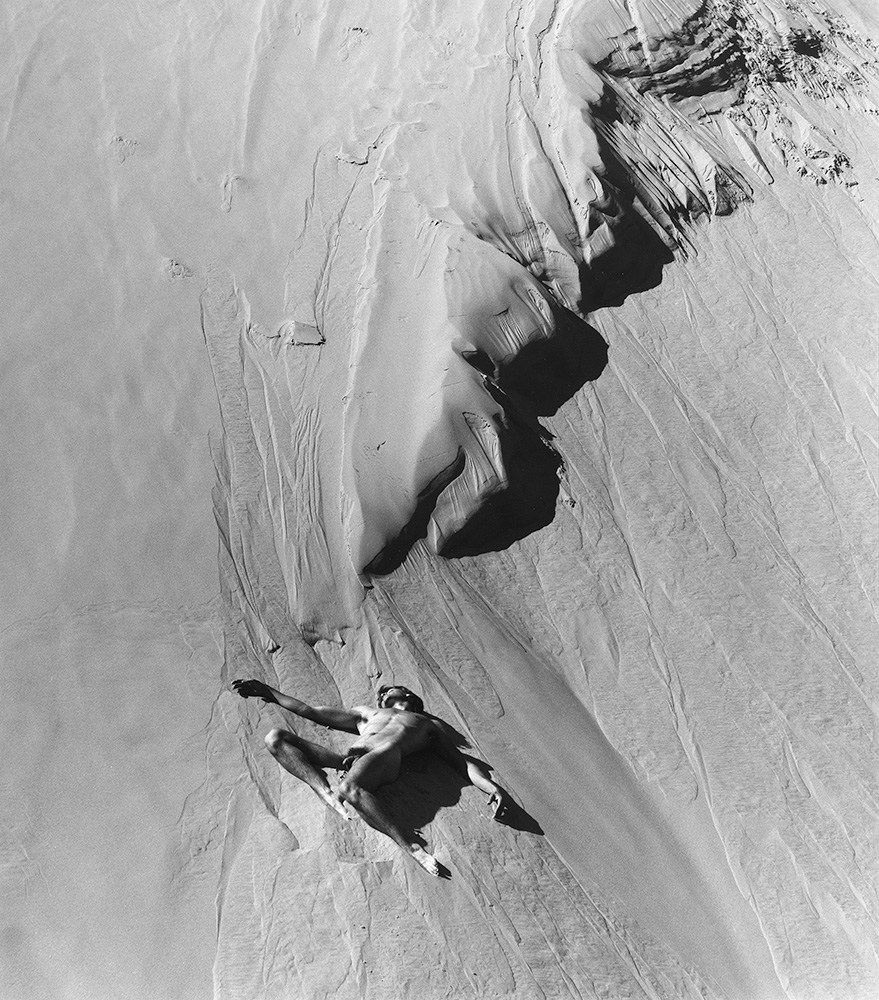
Nude in Stream, 1988
David at the Point, 1984
Lillie, 1976

EDNA BULLOCK

Archive Contact: Barbara Bullock-Wilson (bbw@wynnbullockphotography.com)

Edna Bullock (1915-1997) was born and raised in the small rural community of Hollister, California.  She was a girl of high energy, good at a wide variety of sports, but without a sharp competitive edge.  Her first love was dance.  Although she had dreams of becoming a professional dancer, she was persuaded by her family not to pursue the life of a performer.  Her passion for dance never left her, however, and she found ways to manifest it throughout her life.

After college, Edna taught physical education at Fresno High School until her marriage in 1943 to former concert singer and budding photographer Wynn Bullock.  She devoted the next 15 years of her life to being a full-time housewife and mother, raising two daughters, Barbara and Lynne, along with stepdaughter, Mimi.  She then resumed her teaching career, first in P.E. and dance and then in home economics.  In 1974, she retired from teaching to care for her beloved husband, who died of cancer in November 1975.

Edna began her own career in photography in 1976, the year she turned 61.  As she explained, “I had inherited a darkroom, camera equipment, and supplies.  For more than 30 years, I had been immersed in the world of photography.  My own needs to be artistically creative were strong, so I decided to enroll in beginning photography at Monterey Peninsula College and see what I could do.”  She tackled her new venture with typical zeal and, in an amazingly short time, friends such as Ansel Adams, Morley Baer, and Ruth Bernhard witnessed her evolution from student to workshop assistant to fellow teacher and exhibitor.

An exceptionally prolific artist for two decades, Edna produced a wide variety of black and white imagery, including an extensive series on flea markets.  She is probably best known for her photographs of nudes, many of which can be found in a book released on her 80th birthday titled simply Edna’s Nudes (Capra Press, 1995).  Reflecting her character, her work is intuitive, direct, zesty, graceful (she saw with a dancer’s eye), and touched with humor.

What turned out to be her final exhibition project was titled Edna’s Portraits, an interesting collection of photographs that spanned the entire range of her artistry and gave a fresh glimpse into what portraiture can be.  In her Artist’s Statement, she wrote, “I’m not a deep thinker like Wynn was, but like it was for Wynn, photography has become the best way I have to experience and know things.  When I’m out with a camera, I feel most alive…. I see and understand things I’m not ordinarily aware of.  Mind you, this doesn’t happen every time I photograph…but the magic that I’m talking about makes me want to photograph until I die.”

During her relatively short photographic career, Edna’s images were displayed in over 100 individual and group exhibitions throughout the U.S. and abroad, reproduced in numerous publications, and included in the permanent collections of such institutions as Bibliotheque Nationale, Kyoto’s National Museum of Modern Art, Monterey Museum of Art, University of Arizona’s Center for Creative Photography, and University of California, Santa Cruz.

As the wife of renowned photographer Wynn Bullock, Edna was an important part of her husband’s story for 32 years.  As a woman who began a new career at age 61, she created an inspiring story totally her own.


Wynn Bullock

Posted on May 27, 2020 by APAG in Member Profile
Tree Trunk, 1971
Sea Palms, 1968
Color Light Abstraction 1007, 1961

Erosion, 1959
Child in Forest, 1951
Reticulation, 1945

WYNN BULLOCK

Archive Contact: Barbara Bullock-Wilson (bbw@wynnbullockphotography.com)

http://www.wynnbullockphotography.com/

Wynn Bullock (1902-1975) was born in Chicago and raised in South Pasadena, California.  His boyhood passions were athletics and singing.  The latter became his first career, and it was not until he was giving concerts in Europe in the mid-1920s that he became intrigued with the visual arts.  He bought himself a simple camera and began taking pictures.  Photography remained a hobby, however, until 1938 when he enrolled in the Los Angeles Art Center School.  There he concentrated his efforts in experimental imagery.  Three years later, his work was showcased in one of the early solo photography exhibitions at the L.A. County Museum of Art.

Shortly after World War II, Wynn moved his family to the Monterey Peninsula where he had obtained the photographic concession at Fort Ord.  Although Wynn earned a good living as a commercial photographer, it was in his personal work that he found his greatest fulfillment.

A major turning point in Wynn’s life as an artist occurred in 1948 when he met Edward Weston and was inspired to pursue new avenues of photographic exploration and expression.  Throughout the decade of the 50s, Wynn devoted himself to establishing deep, direct connections with nature in and around the Central Coast of California.  A lifelong learner, he also read widely in the areas of theoretical physics, General Semantics, philosophy, psychology, eastern spirituality, and art.  Studying the work of such people as Albert Einstein, Lao Tzu, and Paul Klee, he kept evolving his own dynamic system of principles and concepts that both reflected and nurtured his creative journey.  In the mid-1950s, two of his photographs were included in the famous Family of Man exhibition and his reputation as a master photographer spread worldwide.

Between 1959 and 1965, Wynn departed from black and white imagery and produced a body of work he referred to as “color light abstractions.”  For him, these photographs represented an in-depth exploration of the phenomenon of light, manifesting his belief that light is a great force at the heart of all being, “perhaps,” as he said, “the most profound truth in the universe.”

By the mid-60s, Wynn was ready to explore the mysteries of light and life from new perspectives.  Developing the means to visually manifest the dynamic qualities of time through long time exposures and multiple images became a key aspect of his work.  This was followed by a relatively brief period of imagery similar in feeling and power to the quiet essence of Haiku poetry.

At the end of the 1960s, Wynn embarked on what was to become the last leg of his creative journey.  Although he included upside-down and negative printing in his repertoire of techniques, it was not their unusual effects that interested him.  What was important was how they served to symbolize new ways of relating to and knowing the world.  Many of his photographs from this period reveal light emanating from within the heart of things, life glowing and pulsing with energy and vitality.  Other photographs are of natural forms that depict or suggest universal human qualities, humanity “deeply embedded in” and re-united with nature.

Shortly before his death in 1975, Wynn became one of the five founding artists whose archives established the University of Arizona’s Center for Creative Photography.  His work is also featured in the permanent collections of over one hundred other institutions throughout the world as well as in three films and numerous publications.   More detailed information may be found at www.wynnbullockphotography.com.                                                                                                                                                                                                                                                           

Walfred Moisio

Posted on December 18, 2019 by APAG in Member Profile
NY Tennis Club, 1950s
Two sailors in the North End of Boston,
Gas Station Cowboy, Arizona, 1952

Street Corner, Manhattan From Above, 1938
Stickball in the Bowery, 1938
Catholic Mission Bowery, 1940

For more information contact Scott Berube – berubescott1@gmail.com


WALFRED MOISIO (1910-2002)    NYC (1928-1952)

The work of Walfred Moisio was quite simply lost to the world for a number of decades and has luckily only recently re-surfaced to be rediscovered.

Walfred Moisio (1910 – 2002). For over three decades, Moisio dedicated his life to observing the ever-changing streets of New York City, candidly capturing  the emotions of its people and time.

Born in 1910, Moisio grew up on a Massachusetts apple farm and from 1928-32 he put himself through Columbia University earning a fine arts degree in photography, in 1933 he moved to New York City to join the Emergency Relief Bureau in a position as photography instructor and later working for the likes of The New Yorker, Esquire, Time, Look, Harpers Bazaar, Vogue, and the New York Times.

Capturing a time of elegantly turned-out Wall Street businessmen and a magnificent burgeoning stone and steel skyline, contrasted by the impact of the great depression.

While contemporaries such as Alfred Stieglitz and Walker Evans influenced his work, what makes Moisio stand apart is both the quality of his observations and the fact that his work has scarcely ever been seen, until now.

Moisio’s street photography artfully captures many of the cultural and historical events of the 1930s and 40s, while presenting us with a wholly original point of view of New York.

Moisio’s ability to depict the essence of time and place within his honest and documentary style of photography is captivating. In this way he explored the social issues of the time. However, whilst you see casual traces of racial integration, sexuality and economic status, you do not feel he is politicising his photographs.

What you feel in looking at his New York is an optimism of spirit and gesture that feels both timelessly enduring and long ago lost in the City we experience today.

For nearly a half-century, the photographs of Moisio had been in storage in the basement of his home in Massachusetts. The public has until now has seen only a handful of these images that focus on scenes of a long ago forgotten New York and the culture of that time.

In 2018 a collection of 700 color slides surfaced documenting one of the earliest cross country road trips over route 66 to California from NYC recorded by a professional photographer. Mr. Moisios archive consists of several thousand negatives and photographs waiting to be seen and enjoyed

  • ‹
  • 1
  • 2
  • 3
  • 4
  • 5
  • ›
  • »

APAG

  • Home
  • About
    • APAG Board
  • Membership
    • Members Only
  • News
  • Resources
  • Members Gallery
  • Conference
  • Education
  • Contact

Contact APAG

Contact APAG for membership, information, or with questions:

Visit our Contact Page »

Follow us on Facebook »

All photos on this website are protected by copyright of the individual photographers and archives whose photographs are represented. All rights reserved, and photos are not allowed to be used for any purpose without permission. Please write to the archives or photographers directly for permission requests.

(*) ©2026 APAG – American Photography Archives Group | Site by KPFdigital | Log in