|

|

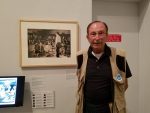

“Who Shot Sports” a new exhibition curated by Gail Buckland opened at the Brooklyn Museum, and includes the work of APAG members Marvin Newman, Jerry Cooke and John Zimmerman. There was a great halftime show, and it is a comprehensive exhibit.

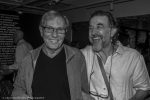




All APAG members were invited to attend the opening of the new ICP at 250 Bowery. Here are some of the members who attended…
Photos copyright Grayson Dantzic – www.graysondantzic.com

Honoree: Photographer Arlene Gottfried received the third annual Alice Austen Award for the Advancement of Photography for her personal photography of New York City and support of the museum. Scenes from the Alice Austen House Museum’s Sesquicentennial Gala. Happy 150th, Alice! June 18, 2016.
http://www.silive.com/entertainment/index.ssf/2016/06/making_alice_austen_proud_muse.html
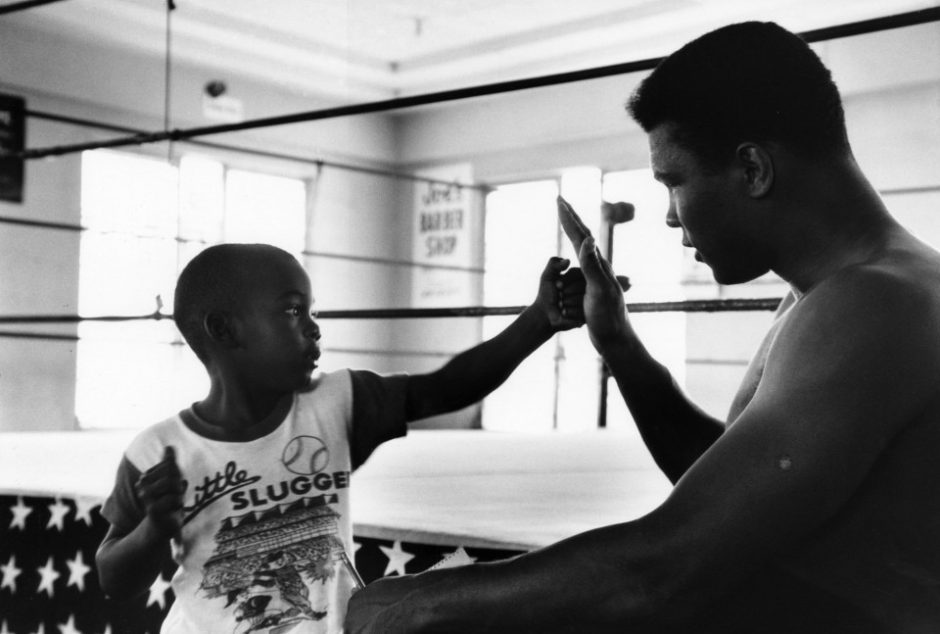
Credit Gordon Parks, courtesy of The Gordon Parks Foundation
Muhammad Ali.
Peter W. Kunhardt Jr., the foundation’s executive director, had known that the boxing great was seriously ill. But when he got a call from The New York Times requesting Parks’s dramatic, close-up portrait of Ali’s face, Mr. Kunhardt knew death was imminent. Indeed, by Saturday morning, the world would know that the champ had died. While many newspapers ran the image of Ali looming triumphantly over the fallen Sonny Liston, The Times ran Parks’s introspective portrait (slide #6) — two days in a row, no less.
“All the other pictures I’ve seen of Ali have been in the fight, in the moment, in the ring,” Mr. Kunhardt said. “Someone said to me, this picture is like the Mona Lisa of Ali. It’s a portrait of Gordon’s Ali. It has Ali’s essence and spirit.”
“American Champion,” which opened on Monday at the foundation’s Pleasantville, N.Y., exhibition space, features about two dozen black-and-white images — including several never seen before publicly — that Parks took of Ali between 1966 and 1970 on assignment for Life magazine. Of course, some of the images show Ali’s sleek athleticism or his personality, by turns playful and brash. Others show quieter moments at home or even in prayer. Together, they offer a well-rounded portrait of Ali taken by a photographer he grew to respect and trust.
For complete article:
May 24, 2016
Today is Bob Dylan’s 75th Birthday, and Daniel Kramer’s magnificent new DYLAN book which was just published by Taschen!
https://www.taschen.com/…/discover_more.daniel_kramer_bob_d…


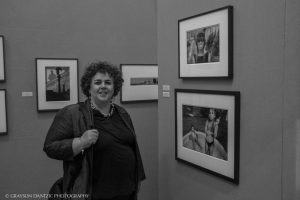
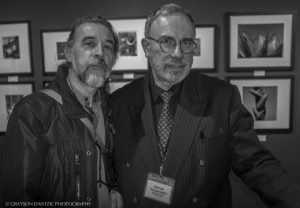
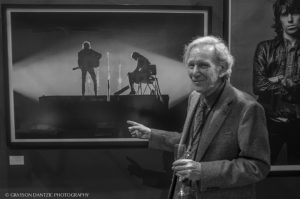
I attended last night’s AIPAD opening and was pleased to see many APAG members including the APAG Board, Grayson Dantzic, Julie Grahame, and Ernest Londa, Advisors, Howard Greenberg and Andrew Smith. Members, Valdir Cruz, Diana Edkins, James Garfinkel, Daniel Kramer, Peter Kunhardt Jr., Scotia Macrae, Patrick Montgomery, Marvin Newman, Emma Winter, and Kore Yoors, Past speakers Denise Bethel, Gail Buckland, Peter Mustardo, Jeff Rosenheim and others,
Also, despite the fire that recently destroyed much of the archive of Linda Troeller, it was great to see both Linda and Lothar Troeller. A gofundme.com account has been started to help. Also, Peter Mustardo of www.thebetterimage.com offered to talk wtih her to see if he can be of any help. Many thanks to Peter! – by Mary Engel

Lucien Aigner, Leniel Hooker, Max Manning, Jim Brown, and manager Raleigh “Biz” Mackey, Newark Eagles, 1939.
A pioneer of 1930s photojournalism, Lucien Aigner (1901–1999) belonged to the generation of photographers that included Robert Capa, Henri Cartier-Bresson, Alfred Eisenstaedt, and Erich Salomon. Embracing the introduction of 35mm film and fast, small, lightweight cameras, these artists changed the face of photography, making candid images that captured contemporary life with powerful immediacy.
Born in Hungary in 1901, Aigner began his career as a reporter, then became a photojournalist for Az Est, a Budapest daily newspaper. At the age of 25, he moved to Paris to work for James Abbe, an American freelance photojournalist. Though this job was short-lived, Aigner remained in Paris and established himself as an enterprising photojournalist—and early practitioner of the Leica camera—whose pictures of world leaders and events, as well as the city and its people, appeared in prominent photojournals such as Vu, Picture Post, and LIFE. In 1939, before the invasion of France, he immigrated to the United States, where his work appeared in such publications as the New York Times, the Christian Science Monitor, Look, Coronet, and Pageant. He became an announcer and eventually a producer and director at the Voice of America in the late 1940s. During the McCarthy era in the early 1950s, he was forced to leave his job. For the next 20 years or so he operated a portrait studio in Great Barrington, Massachusetts. In 1970, Aigner rediscovered a suitcase that—having survived WWII occupation—contained approximately 50,000 of his 1930s negatives. He had not opened it since 1950 when his brother, leather goods designer Etienne Aigner, emigrated from Paris and returned it to him. Several years later, the photographer closed his portrait studio to focus on the cataloguing and indexing of his collection of over 100,000 negatives. Following his death in 1999, Aigner’s family continued to catalogue, research, and care for this vast collection.
Consisting of tens of thousands of negatives and thousands of prints and contact sheets, this rare and comprehensive collection is made all the more unique by Aigner’s extensive writings that accompany virtually every image or series of images and explain the circumstances under which they were shot, and often the current events that surrounded the photo shoot. Considering himself as much a journalist as a photographer, Aigner paired text and pictures to vividly describe a range of themes, from European cafés to American prisons; from Bastille Day celebrations in Paris to amusement rides in Coney Island; from rehearsals at the Paris Opera Ballet to street life in Harlem. Documenting major European and American political and cultural events, Aigner’s archive includes portraits of world leaders and celebrities including Louis Armstrong, Josephine Baker, Winston Churchill, Albert Einstein, Adolf Hitler, Benito Mussolini, Sara Delano Roosevelt, and Haile Selassie, among numerous others. A master at timing, Aigner’s candid portraits reflect his desire to reveal the essential vulnerability of prominent figures.
For more info:


Harry Belafonte Whitney Houston Leontyne Price
Twenty-five Jack Mitchell photographs of important African American artists and performers are now a part of the permanent collection of the new Smithsonian National Museum of African American History and Culture.
The acquisition includes lifetime vintage silver gelatin and color photographs made by Jack Mitchell over a career spanning five decades. Mitchell died in 2013 at age 88. His first ever cover photograph for a major magazine was of Haitian dancers for the May 1951 issue of Color Magazine.
The subjects include singer-songwriter Harry Belafonte, the Katherine Dunham Dance Company, actress Gloria Foster, singer Whitney Houston (in her first photo session with a professional photographer), dance company founders Bill T. Jones and Arnie Zane, dancer/actress Carmen de Lavallade, writers Audre Lorde and Toni Morrison, singer Odetta, actor Melvin Van Peebles, opera singer Leontyne Price, hip hop group Public Enemy, designer Willi Smith, La MaMa theatre founder Ellen Stewart, singer Donna Summer, actress Cicely Tyson, actor Ben Vereen, and dancer George White.
The Smithsonian National Museum of African American History and Culture opens September 24, 2016, on the National Mall in Washington, D.C., and will reflect the richness and diversity of the African American experience. Jack Mitchell’s photographs are also in the permanent collections of the Smithsonian Archives of American Art, the Smithsonian National Portrait Gallery, the Andy Warhol Museum, the John Lennon Museum, Harvard University, the Metropolitan Opera Portrait Gallery, and many others.
View all 25 photographs on the Jack Mitchell Archives website, here:
http://www.jackmitchell.com/announcements.php
Craig B. Highberger
Executive Director, Jack Mitchell Archives
 The luminous and compelling photographs in New York in the 1970scapture the essence of a city in a way best described as “place portraiture.” Trager’s images present the architecture of Manhattan with time-defiant clarity and beauty. Although Trager selected his subjects for aesthetic and visual reasons-rather than from an historical or documentary point of view-with the passage of time his distinctly imaginative photographs have also acquired value as historical documents. The negatives for the images in this book, only recently rediscovered, had originally been archived for printing but Trager began other projects before any prints were made. The photographs in New York in the 1970s were taken at the same time as Trager’s timeless Philip Trager: New York, published by Wesleyan University Press in 1980, in which the photographer depicts the city “as a solitary figure, always aware of the ‘enveloping sky.'” New York in the 1970s reveals Trager’s more concentrated attention to the interaction between the city’s architecture and the dynamics of the street.