

|
|
Barbara Moore, Independent Scholar and Director, Peter Moore Archive
Speed-dating the Avant-Garde: 15 Festivals in 30 Minutes
Barbara Moore is an independent scholar of seminal late 20th-century art alternatives such as performance and artists books. She was the first editor at Dick Higgins’s legendary Something Else Press, a rare-book dealer for thirty years specializing in printed manifestations of the avant-garde, and has written and lectured extensively on these subjects. For more than 55 years she has directed the vast Peter Moore photographic archive, from which the images in this lecture have been selected, and is currently writing a book about the archive and its role in the historical documentation of performance art.
see more at:
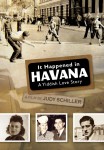

He didn’t speak Spanish. She didn’t speak English. After 61 years of marriage he was still on his honeymoon.
In Forest Hills, Queens, a couple sits on their living room couch as the husband and wife each recount how they met in Cuba during the start of WWII.
In her cinematic debut, filmmaker Judy Schiller takes the viewer on two journeys: her mother’s, from Poland to Cuba, where she and her family were the only Jews in their town; and her father’s beginning on New York’s Lower East Side, where the street was the playground.
Equal parts romantic tale and history lesson, the film features poignant period footage and priceless home movies. The accompanying soundtrack intertwines Cuban and American music and enhances the couple’s affectionate dialogue.
How did they stay married for the 61 years? See their daughter’s tribute–and find out.
|
|||||||||
|

Martin Elkort 1950 ©Martin Elkort
In the spring of 2014, I stepped up to a podium in the Brown Auditorium Theater of The Museum of Fine Arts, Houston. The place was full and the audience attentive, expectant. They had just seen my documentary, “Martin Elkort: An American Mirror” about my father, and I was unsure if I could make it through my speech. I had long focused my professional life on people’s life histories, on creating something they could leave as a legacy for future generations of their families. I had finally decided to do the same for my family while my parents were still alive and in good health. The process took eight years.
I began to record my parents sometime in 2006. They sat side-by-side on the sofa in my home as I interviewed each in turn. But when I turned the camera on my father, more often than not, my mother interjected, correcting him, and then Dad deferred to her “recollection of events.” Worse, my mother had a long history of embellishing facts, which made it difficult to figure out what was the truth in what she said, and what was fantasy. Two years later, they came back to Houston to visit, and I tried to continue with them, but, this time, I was determined to get my father’s story in his voice.
I asked to interview Dad alone.
We covered many topics: general family history, what he knew of his parents and grandparents, his recollections of childhood, and his hospitalization with polio at fifteen. He talked about his early start as an artist and falling in love with photography.
To appease my mother, I did a few more interviews of her with my dad. It wasn’t apparent to me at the time, but looking back at the clips now, I see the signs of her impending dementia.
By then I had ten hours of video footage. I wasn’t sure what I was going to do with it all, but in my work, all too often I have raced against fading memories. I was well aware of the need to chronicle these stories while I still could. I was satisfied that I had captured some of our family histories, but the seed was planted for something more; I found my father’s story compelling, and important beyond our little family.
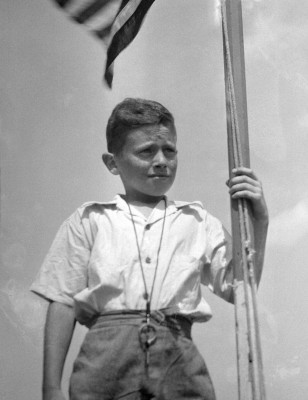
© Martin Elkort
He took to walking the streets of New York City documenting the post-war boom. He loved to watch recent immigrants on the Lower East Side celebrate rebuilding their lives. Years later, reviews of his photography would point to the optimism of these photos during the post-depression period when it was easy to see only despair and decay.
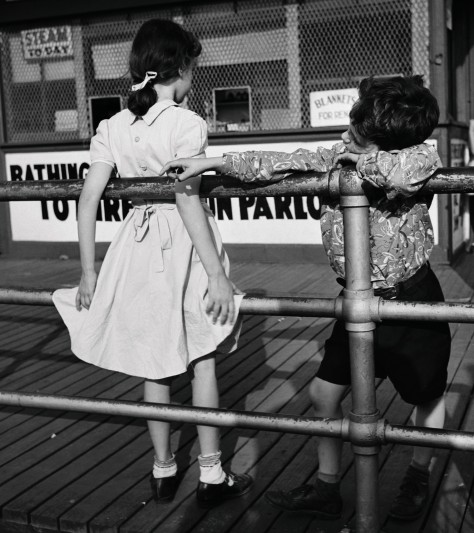
Puppy Love 1951 © Martin Elkort
read more here…
 In the 1940’s and 1950’s, Martin Elkort roamed the streets of New York City with his camera in search of the perfect picture. His indelible images of simpler times remind us that the human experience can be a joyous one. Elkort was particularly drawn to the raw innocence of the children inhabiting the streets of New York, and later his current home, Los Angeles. Poignant and insightful, his photographs capture their curiosity and vigor as they explore the urban landscape. With an introduction by Anne Wilkes Tucker, Curator Emerita of Photography at The Museum of Fine Arts, Houston, this 69 page study of childhood features 62 of Elkort’s most intriguing black & white images of children punctuated with his eloquent reflections on photography and his creative process. This 9 x 9” offset print book will make a wonderful addition to any photographer’s book collection as well as anyone who enjoys experiencing the world through a child’s joyful eye.
“A beautiful photograph, like a beautiful poem, always contains a mystery, an elusive and haunting nucleus that makes us return again to probe its depths, hoping to winnow yet another insight.” – Martin Elkort
Educated at The Cooper Union, Elkort was also a member of the renowned New York Photo League where he studied under, and shared darkrooms with Aaron Siskind, Lou Stoumen and Sid Grossman, among others. He became adept at what he refers to as ‘stealth photography.’ With his camera strapped around his neck, he walked peering down into the 2×2 inch ground glass of the camera. He developed the skill of walking right up to a person and taking their photo without them even realizing it.
After marrying in 1953, he moved away from street photography in order to support his growing family. He journeyed back to it when he retired and found a growing interest not only in the Photo League, but in his own work as well.
Martin Elkort’s work is widely exhibited and can be found in the permanent collections of The Museum of Modern Art, The Getty Museum, The Museum of Fine Arts, Houston, The US Holocaust Memorial Museum, The Jewish Museum in Brooklyn, The Columbus Museum of Art as well as many corporate and private collections.

Supermodel Erin Heatherton is known for her work with Prada, Victoria’s Secret, and pretty much everyone else. It turns out she also has a knack and real interest in interior design. She completely redesigned her West Village apartment to maximize space, light, and of course comfort.
“One of the favorite things in my home is these photos on the wall taken by my cousin Esther Bubley, and she kinda put the cherry on the top for me!”
-Erin Heatherton
http://www.nbcnewyork.com/blogs/open-house/Erin-Heatherton-Shows-Us-Her-Stylish-NYC-Pad.html

By David Schonauer Tuesday March 1, 2016
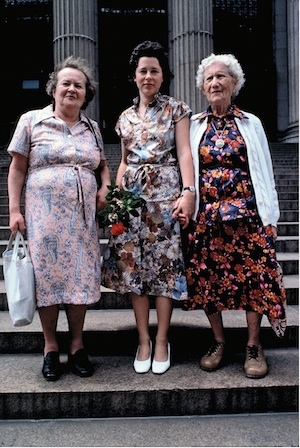 |
Arlene Gottfried has been investigating life on the clamorous corners of New York City for four decades.She’s photographed lovers caressing on park benches, the homeless sleeping on subway seats, and choirs belting out gospel songs. She’s captured warm moments of daily life and those odd urban juxtapositions — a muscle-bound Puerto Rican man in a tiny swimming suit standing next to an elderly woman in Brighton Beach; a Hassidic man among the crowd at a nude beach in Far Rockaway — that make the city a smorgasbord for street photographers. As a photojournalist she has worked for Life, Time, Newsweek, Fortune and other magazines and been admired by generations of photo editors. Yet in all those years of taking pictures and all the miles of New York sidewalks she has trod upon, she has never had the kind of attention she is getting now.
All of a sudden, Arlene Gottfried is hot.
“It takes a lifetime to be a new discovery, I guess,” she says.
Gottfried has recently been dubbed an “NYC treasure” by theGothamist and “a quiet storm of power” by Glitterati. Britain’sGuardian newspaper has praised the “intimacy and wry humor” of her work, while the AnOther blog described her photography as a “candid and captivating ode” to New York. Last fall she had a solo exhibition at the Hardhitta Gallery in Cologne, Germany, followed by a solo show on view now at Les Douches gallery in Paris. New York’s Daniel Cooney Fine Art gallery showed her street photography in a 2014 show that drew television crews and newspaper reporters from around the world and on March 3 will open another exhibition, this one featuring Gottfried’s photographs of New York’s Puerto Rican community. That work was originally collected in her 2011 book Bacalaitos & Fireworks.
read the entire article here:
http://www.ai-ap.com/publications/article/16918/photographer-profile-arlene-gottfried-it-takes.html


