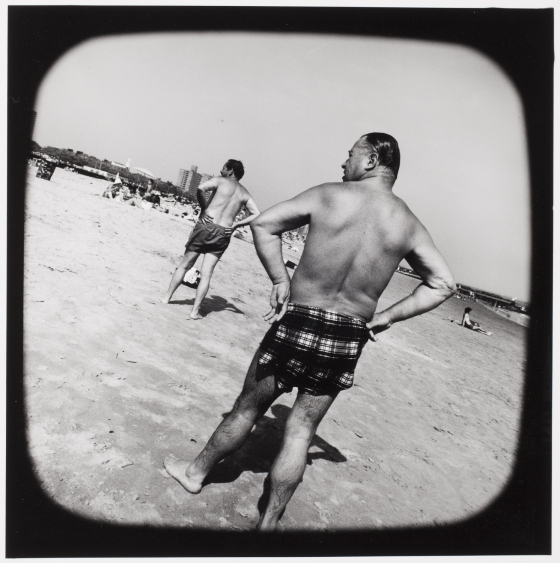
Short film about the Sam Shaw opening and exhibition at the Centro cultural de Cascais in Portugal. Attended by his daughters Meta Shaw Stevens, Edie Shaw and his granddaughter Melissa Stevens.

Short film about the Sam Shaw opening and exhibition at the Centro cultural de Cascais in Portugal. Attended by his daughters Meta Shaw Stevens, Edie Shaw and his granddaughter Melissa Stevens.
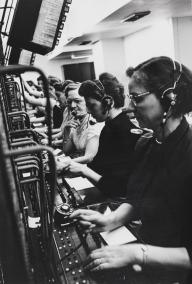
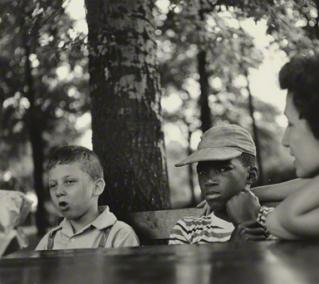
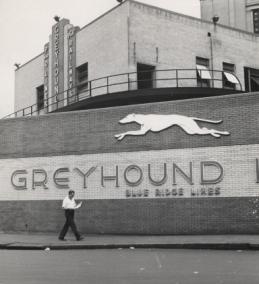
An independent photographer during the heyday of American photojournalism, Esther Bubley documented a wide range of subjects including families and children, industrial installations, and transportation. Her photographs of ordinary life capture the unique personal dimension of seemingly mundane activities. Jean Bubley, director of the Esther Bubley Photography Archive, discusses the work of her aunt Esther Bubley, featured in American Moments.
http://www.phillipscollection.org/events/2015-08-27-gallery-talk
(go to related multimedia on lower right hand side to hear a 2:30 minute talk by Jean Bubley)
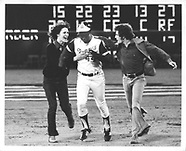
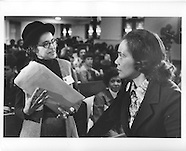
When I arrived in Atlanta in 1971 and started doing assignments for national, regional and local publications, including Time, Newsweek, Business Week and Georgia Magazine, I did not realize then that I would create a photographic archive that would be valuable enough to be acquired by a an important university library decades later. This article is a guide for other photographers who have a collection of photographs and are looking for placement of their images.
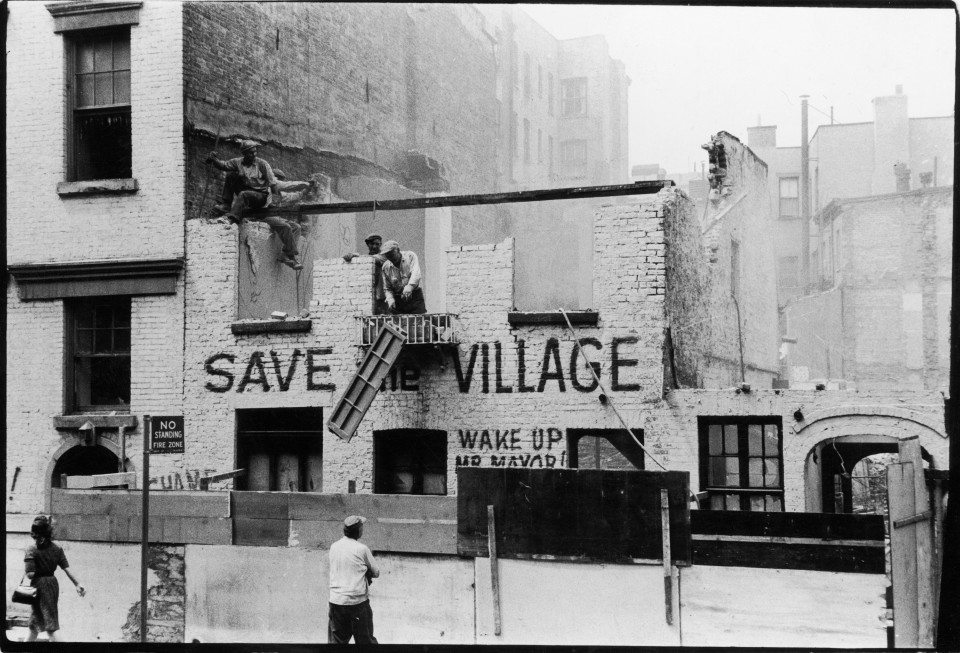
Save the Village (Tuesday) Last year the Steven Kasher Gallery in Chelsea put on an exhibition with the photography of Fred W. McDarrah, who documented the changing scene of Greenwich Village since the 1960s. Now, the spirit of that show has taken the form of this walking tour, which includes stops at the places McDarrah captured on film: locales like Washington Square Park and the Stonewall Inn. At 10 a.m.; the tour meets at Christopher Park, Stonewall Place, at Seventh Avenue, West Village, savethevillagetours.com.
http://www.nytimes.com/2015/08/21/arts/spare-times-for-aug-21-27.html?_r=0
FOR IMMEDIATE RELEASE
PLEASE CONTACT: info@savethevillagetours.com or 917 975 4415 (MEDIA ONLY)
SAVE THE VILLAGE: A WALKING TOUR OF THE PHOTOGRAPHS OF FRED W. McDARRAH
TO KICK OFF AUGUST 4.
Based on the blockbuster show at Chelsea’s Steven Kasher Gallery, these unique walking tours don’t bring people to a gallery, but instead to the downtown locales documented by the longtime Village Voice photographer and picture editor Fred W. McDarrah – and the stomping grounds of the individuals he photographed that helped shape the 1960s ethos, including Bob Dylan, Andy Warhol, Jack Kerouac, Jimi Hendrix, Norman Mailer, Allen Ginsberg and many more.
During his 50-year association with the Voice – the world’s most famous alternative newspaper and the house organ of the postwar counterculture – McDarrah amassed a 250,000 image archive that is an encyclopedic catalog of the people, places, movements, trends and events of the New York scene over the second half of the 20th century. So many individuals and groups came to the Save the Village gallery show, and staffers were peppered on a daily basis with so many questions about the photos and the changing face of Greenwich Village and the convulsions of the culture that McDarrah captured… The exhibition ended, but the interest in the Village in the ’60s and McDarrah’s documentation of the changing scene did not wane one bit.
Now, tour-goers will get a multi-postcard set of some of the most iconic of McDarrah’s images and see the exact same places today, including the townhouse on West 11th St. blown up by the Weather Underground, Electric Lady studios, the Stonewall Inn, Christopher Park, Judson Church and Washington Square Park.
Other tours in the series include The Beats, The Artists World and The East Village.
If Greenwich Village is the historic home of the counterculture, then the East Village can be called famous for its off-the-counter culture. On this tour, see where Chicago 8 defendant Jerry Rubin paraded down St. Mark’s Place with a machine gun; the Polish catering hall where the Velvet Underground played its first gigs, the original home of the Fillmore East concert hall, and more.
The Artists World tour is based on a 1961 McDarrah book that is often the sole visual record of a special time and place in the history of American art. The tour visits the East 10th St. Gallery Row where de Kooning had his studio and the nearby neighborhood spots where artists including Franz Kline, Ad Reinhardt, Joan Mitchell, Lee Krasner, and Adolph Gottlieb lived, worked, played, exhibited and famously drank.
The Beats tour will visit the coffee houses, clubs, and other venues (some remaining, some not) where Jack Kerouac, Allen Ginsberg, Gary Snyder, Peter Orlovsky, Diane DiPrima, Gregory Corso and William S. Burroughs made literary history.
In addition, all tours are available for private bookings; custom or combination tours can be arranged.
Tickets are $15 (Students, seniors, individuals with a valid library card, or a membership in a Historic
Preservation Society, Group or Association) to $25 (Adult) and every ticket includes a keepsake postcard packet.
For tour schedules, to make reservations and for more information, go to SaveTheVillageTours.com.

CONVERSATION: DORYUN CHONG AND HERB TAM ON TSENG KWONG CHI
THURSDAY, JUNE 25, 2015 AT 6.30 PM – 8.00 PM
MUSEUM OF CHINESE IN AMERICA
215 CENTER STREET, NEW YORK CITY
Doryun Chong, chief curator, M+ Hong Kong, and Herb Tam, curator and director of exhibitions, Museum of Chinese in America, will discuss Tseng’s life and art in New York, his influence on younger Chinese artists, and how his cultural identity may have impacted his work.
Generously supported by the Asian Cultural Council. Co-sponsored by the Museum of Chinese in America and NYU’s Grey Art Gallery.
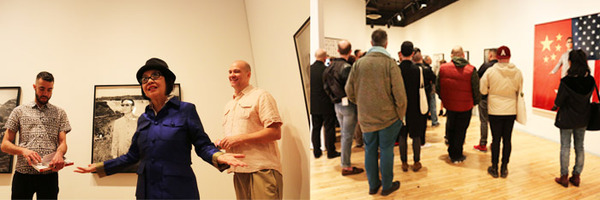
Muna Tseng will offer walk-throughs of the exhibition “Tseng Kwong Chi: Performing for the Camera” on Wednesday nights in the month of June. Please RSVP with your date to reserve your spot. The tour from 7.00 to 7.30 pm FREE.
Exhibition on view: APRIL 21 – JULY 11, 2015
GREY ART GALLERY, NEW YORK UNIVERSITY
100 WASHINGTON SQUARE EAST, NEW YORK CITY
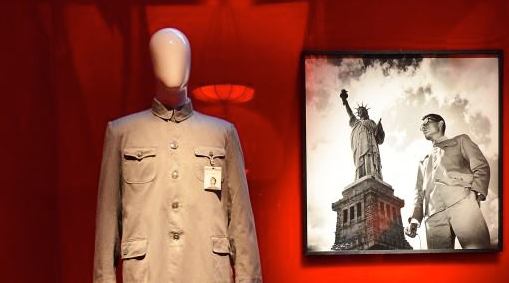
CHINA: THROUGH THE LOOKING GLASS
EXHIBITION ON VIEW: MAY 7 – AUGUST 16, 2015
THE METROPOLITAN MUSEUM OF ART, NEW YORK
Tseng Kwong Chi’s “Mao Suit” and photograph from his East Meets West series are part of the exhibition China: Through the Looking Glass at the Metropolitan Museum of Art. In this collaboration between The Costume Institute and the Department of Asian Art, high fashion is juxtaposed with Chinese costumes, paintings, porcelains, and other art, including films, to reveal enchanting reflections of Chinese imagery.
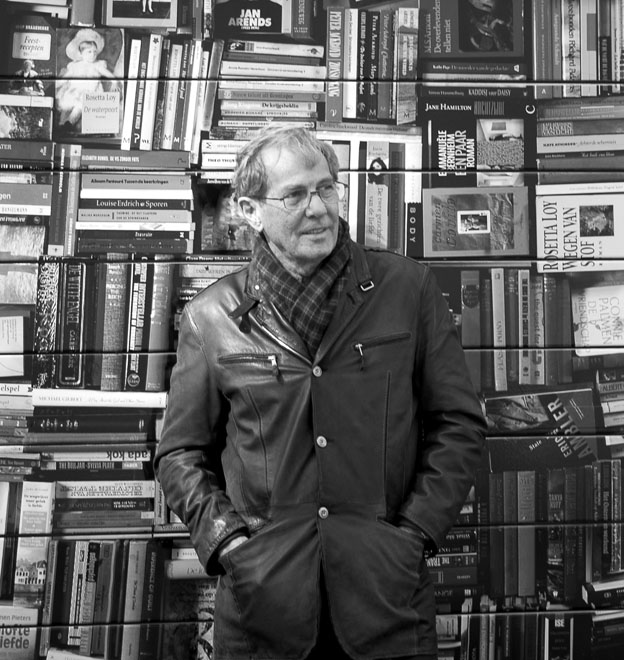
George Tice has been working in the field of photography for more than 60 years, focusing his camera on the American rural and urban landscape. He is drawn to vestiges of American culture on the verge of extinction – from people in rural or small-town communities to urban and suburban neighborhoods that are often in decline.
Tice was born and raised in Newark, New Jersey in 1938. At fourteen, he joined the Carteret Camera Club and later worked as a darkroom assistant for a Newark portrait studio. After enlisting in the U.S. Navy at age seventeen, Tice’s talent quickly promoted him to Photographers Mate Third Class. One of his images of an “Explosion Aboard the U.S.S. Wasp, 1959” was acquired for the Museum of Modern Art by photographer Edward Steichen. After his navy service Tice worked as a home portrait photographer for the next decade.
In the 1960s, Tice shifted from smaller camera formats to larger ones, which enabled him to craft finely detailed prints. George Tice is considered a virtuoso of the fine print, and a master printer, not only of his own work, but for others for whom he has made fine prints. During this time, he met Lee Witkin and helped establish the Witkin Gallery, the first commercially successful gallery in New York dedicated to fine art photography. The association with Witkin also led to Tice printing limited-edition portfolios of some of his favorite photographers, among them Edward Steichen, Edward Weston and Fredrick H. Evans, as well as other important photographers including Francis Bruguiere, Ralph Steiner and Lewis Hine.
By 1970, thanks in part to shows and sales of his work through Witkin, Tice was able to concentrate entirely on his own photography. The extended photographic essay is an important part of Tice’s work. The form and process of each project is an investigation leading to a book. Tice taught a master class at The New School, NYC and the Maine Media Workshop for over twenty-five years.
Tice has had eighteen books published to date. His first book Fields of Peace, documented the life of Amish and Mennonite communities of Pennsylvania. In the late 1960’s, Tice began exploring his home state and those photographs formed the beginnings of two of his best-known books: Urban Landscapes, A New Jersey Portrait, (1975) and Paterson, (1972), with sequels, George Tice : Urban Landscapes in 2002, Common Mementos in 2005 and Paterson II in 2006. His most recent book Seldom Seen (2013) is a collection of previously unpublished photographs. James Rhem states in an article in Focus Magazine, “The stillness in what Tice himself describes as the “sad beauty” of his urban scenes has a different weight, the weight of history, not moments, but stories evolving.”
His photographs have been exhibited internationally and are represented in the collections of many institutions including the Metropolitan Museum of Art, Museum of Modern Art, Art Institute of Chicago, The Getty Museum, Whitney Museum, Newark Museum and the Bibliotheque Nationale. He has received fellowships and commissions from the Guggenheim Foundation, the National Endowment for the Arts, the New Jersey State Council on the Arts and the National Media Museum, (UK). In 2003, he received an honorary Doctorate of Humane Letters degree from William Paterson University.
Tice, a 10th generation New Jerseyan, makes his home on the Jersey Shore.
 ©Susan May Tell_Waiting for train, 1982 |
| I am thrilled and humbled to announce the MacDowell Colony has awarded me a Fellowship for the 2015 Summer Residency. Their tagline is “Freedom To Create” — which is exactly what I’ll be doing. Using the studio’s darkroom, I will revisit, edit and print my early (1974-82) B&W negatives. Although the early edit led to solo exhibitions, the fellowship offers the opportunity to prepare an updated portfolio for galleries and museums. It will also be a fascinating opportunity to look through the prism of time to see what the imagery says now about that era. |